all in one place.
Log what you watch. Rate your favorites. See what friends are into.
Network
Genres
Created by
Where to Watch
Links
Aired
Network
Genres


S09 E01 • Wednesday, Jan 2, 2002 • Jan 2 • 44m
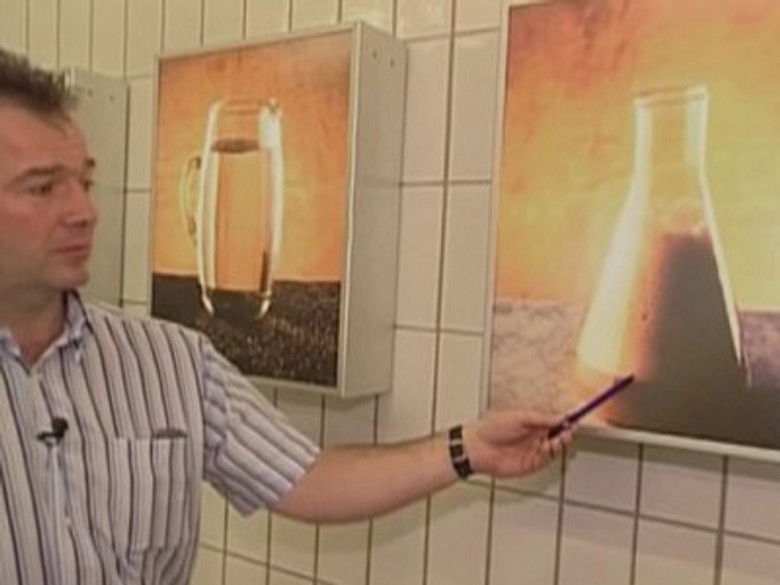
From Pilgrim brew masters to early commercial ventures to today's monolithic corporations, we'll imbibe American beer's long history, focusing on the commercial brewing industry that developed in the 19th century and continues to today. We'll also taste social experiments from the past, like the Temperance Movement and Prohibition, to see how they left scars on the industry and continue to influence sobriety today.
S09 E02 • Thursday, Jan 17, 2002 • Jan 17 • 44m
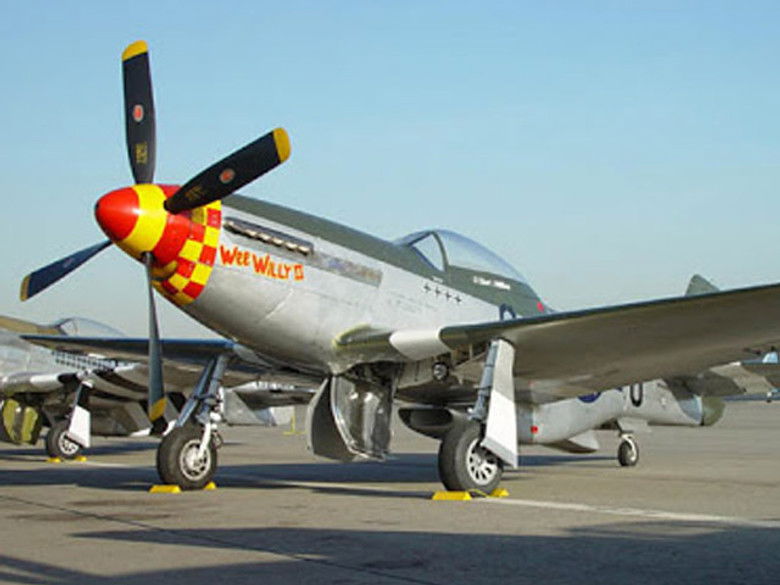
Flight was born in America at the turn of the 20th century. But WWII saw more planes built in a single year–300,000–than had been built in the previous 40. Footage of restored aircraft, historic film ranging from factory floors to dogfights, and interviews with pilots and designers recapture the aviation industry's finest hour.
S09 E03 • Monday, Jan 28, 2002 • Jan 28 • 44m
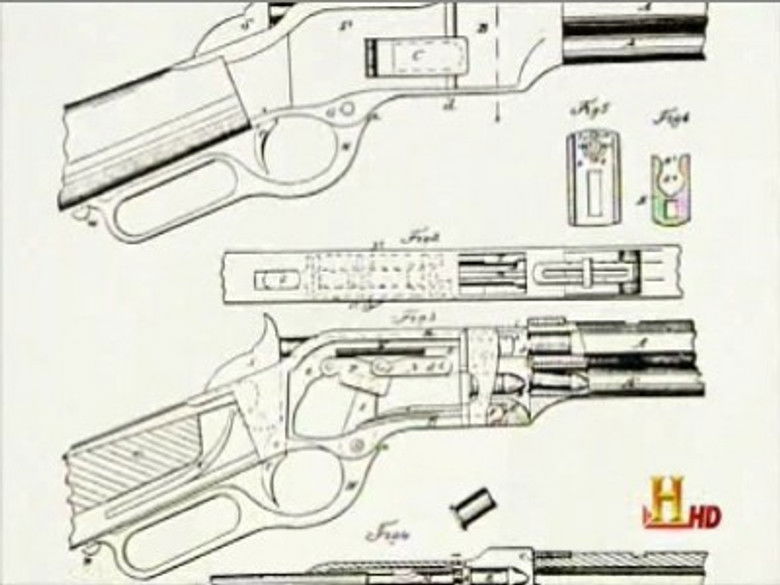
Winchester…the name still evokes images of the Wild West and the taming of the frontier–it was the first reliable repeating rifle and settlers brought it along as they moved west. Prized by Civil War soldiers, the lever-action rifle was preferred by lawmen and outlaws alike. A classic Winchester can command upwards of $100,000 from collectors trying to buy a piece of the Old West. We see how a shirt manufacturer named Oliver Winchester became the most famous gun maker of the American West.
S09 E04 • Tuesday, Jan 29, 2002 • Jan 29 • 44m
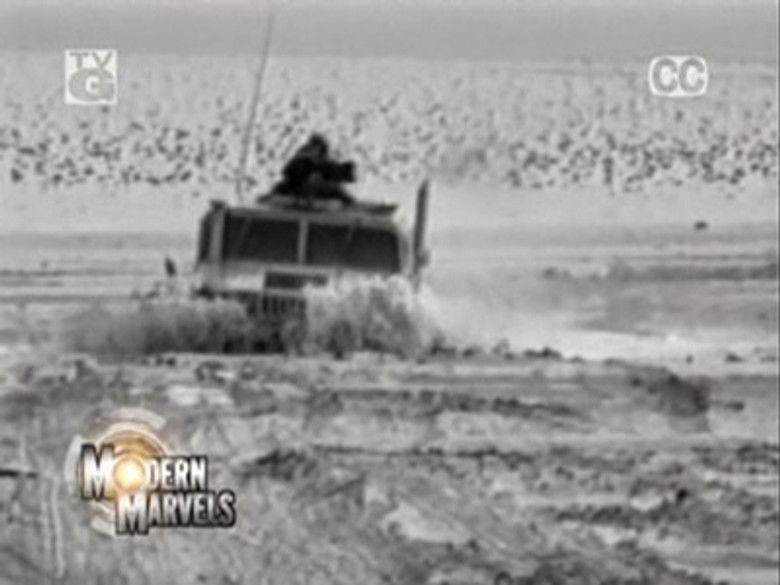
The rousing story of the tank, from its primitive appearance in WWI to the high-tech world of modern tank warfare, with emphasis on the tank’s Golden Age during WWII. In the second hour, we’ll look at the American soldier’s best friend in WWII–the Jeep. A “Blitz Buggy” could serve as a combat car, snowplow, or ambulance!
S09 E05 • Wednesday, Jan 30, 2002 • Jan 30 • 44m
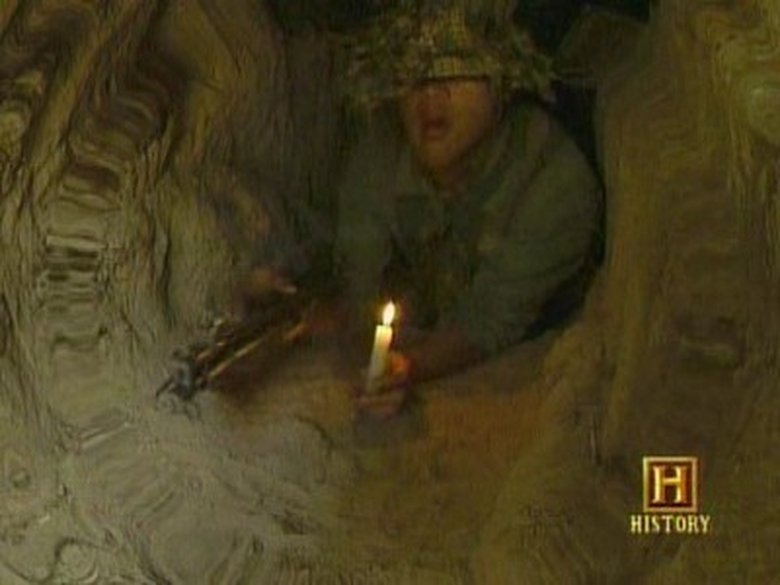
Here is the heroic story of a intrepid band of infantry soldiers, the "Tunnel Rats", charged with a daring mission–to search for, find, and destroy a secret subterranean network of enemy tunnels in Vietnam. Armed with only a flashlight, valor, and a .45, they faced a determined foe and overcame lethal odds, uncovering secret enemy arms and intelligence caches. Tragically, many of these volunteers died and others were seriously wounded on this terrifying suicide mission.
S09 E06 • Thursday, Jan 31, 2002 • Jan 31 • 44m
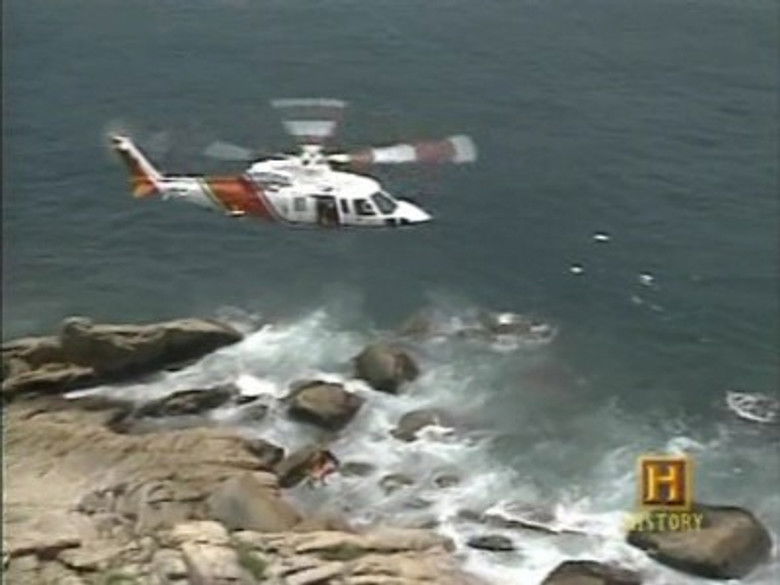
From the early “egg beaters” of World War II to the “flying tanks” of Operation Desert Storm, we’ll fly aboard one of the most agile and potent weapons on the battlefield–the helicopter. Meet the first pilot to fly a combat rescue mission in WWII and a U.S.A.F. female aviator; and view classified footage of the Apache in Iraq.

S09 E07 • Friday, Feb 1, 2002 • Feb 1 • 44m
From today’s ultra chic, state-of-the-art private jets to Lockheed’s 1957 Jetstar, this 2-hour special investigates the history, the luxury, and technology of America’s corporate jets. We meet a few of the men and women who pioneered them–Bill Lear, Clyde Cessna and his nephews, Walter and Olive Beech. Actor Michael Dorn explains what it takes to buy a previously-owned jet. And, we see the latest in kit jets and look into the new must-have of the super rich–jets the size of commercial airliners.
S09 E08 • Tuesday, Feb 19, 2002 • Feb 19 • 44m
His movies are legend, his women beautiful, and his toys the best in the world. Whether James Bond is foiling villains in space-age flying machines or eavesdropping on his enemies with ultra-sophisticated spy gear, British Secret Agent 007 is always guaranteed to have the most outrageous and wonderfully creative gadgets ever to grace the silver screen. Bond had it all. But as we see in this exclusive look at his gadgets, it takes a lot to save the world!
S09 E09 • Tuesday, Feb 26, 2002 • Feb 26 • 44m
Press a button and you can soar in the sky, command a virtual pet, adjust the thermostat in your house while driving in your car, and, of course, change the channel on your TV. The remote control revolution began in 1898, when inventor Nikola Tesla successfully controlled a 6-foot-long iron-hulled model boat using radio waves. Today, Microbots are the latest remote control marvel. We'll see how, in our technologically-evolved world, pressing a button to get what we want has become commonplace.
S09 E10 • Tuesday, Mar 5, 2002 • Mar 5 • 44m
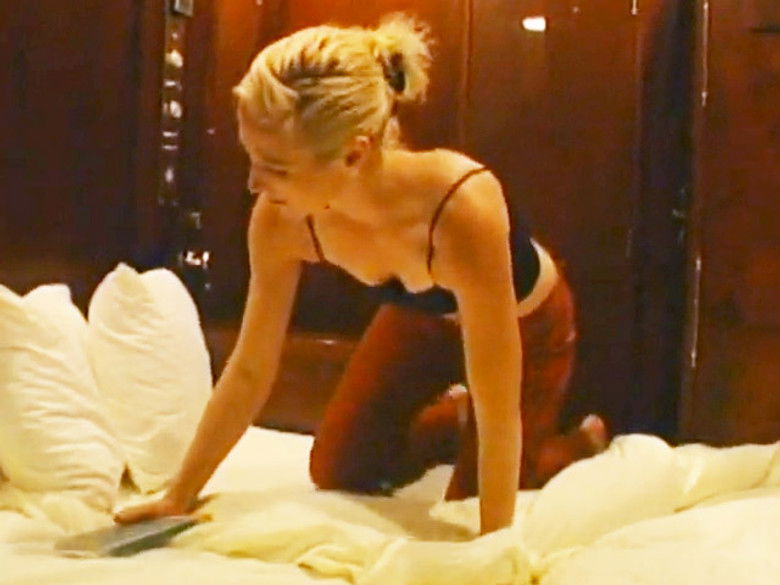
For millennia, luxury toys have functioned as flashy instruments of affluence, authority, and identity and driven many kingly consumers to covet, create, and purchase these status symbols. From the Roman Emperor Caligula’s special barges to Carl Faberge’s impossibly intricate eggs, from plasma screen TVs to $600,000 Bentleys and Rolex watches, we examine spectacular personal possessions–paeans to the lords of a consumer culture that grows richer and technologically more sophisticated daily.
S09 E11 • Tuesday, Mar 12, 2002 • Mar 12 • 44m
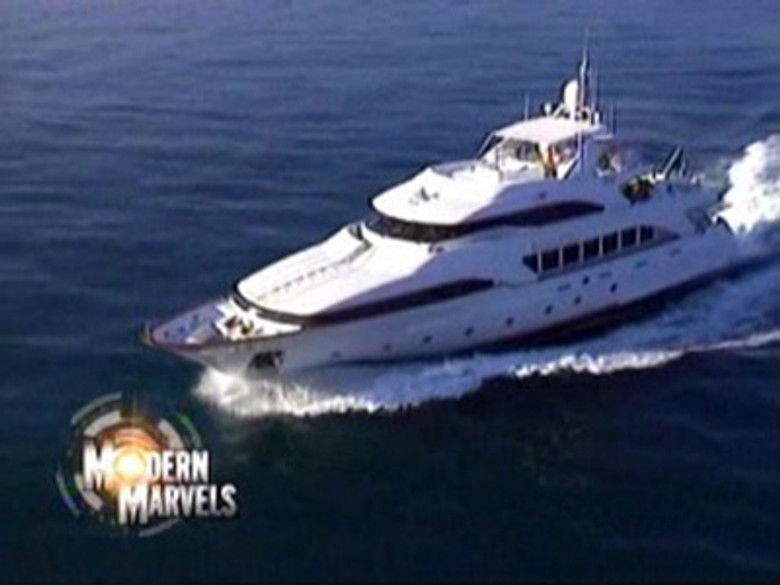
As we power-up and unfurl the sails on a magical cruise through time, viewers meet the people who’ve devoted their lives to pleasure boating. Traveling throughout the U.S. and Europe, we delve into a world of luxury, adventure, and sport on spectacular vessels ranging from classic yachts to sports boats to the ultimate floating palaces. In this timeless pastime, technological wonders continue to evolve and enthrall.

S09 E12 • Tuesday, Mar 19, 2002 • Mar 19 • 44m
How do you stop a speeding bullet? From body armor to armored cars and trucks, we review the history of the race between the bullet and a successful way to stop it. It's not exactly easy to design material that can catch gunfire traveling up to 3,000 feet per second. We'll look at little-known advances like bulletproof layering hidden in walls, futuristic smart materials that "remember" how to stop a bullet, and a system that deploys a shield within milliseconds when it detects an oncoming round.
S09 E13 • Tuesday, Mar 26, 2002 • Mar 26 • 44m
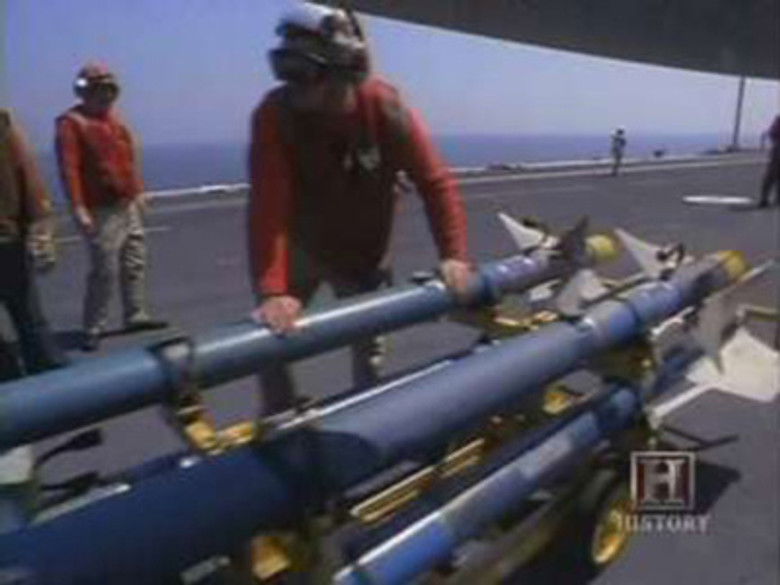
A look at siege machines that convert energy into mechanical force to go over, under, or through fortified or fixed defenses too strong for conventional force. These engines range from man's first long-range missile weapon, the slingshot, to the laser cannons and satellite-destroying robots of the 21st century. All of these machines are designed to breach barriers–castle walls, entrenched troops, even outer space. When the going gets tough, the tough get siege machines.
S09 E14 • Tuesday, Apr 9, 2002 • Apr 9 • 44m
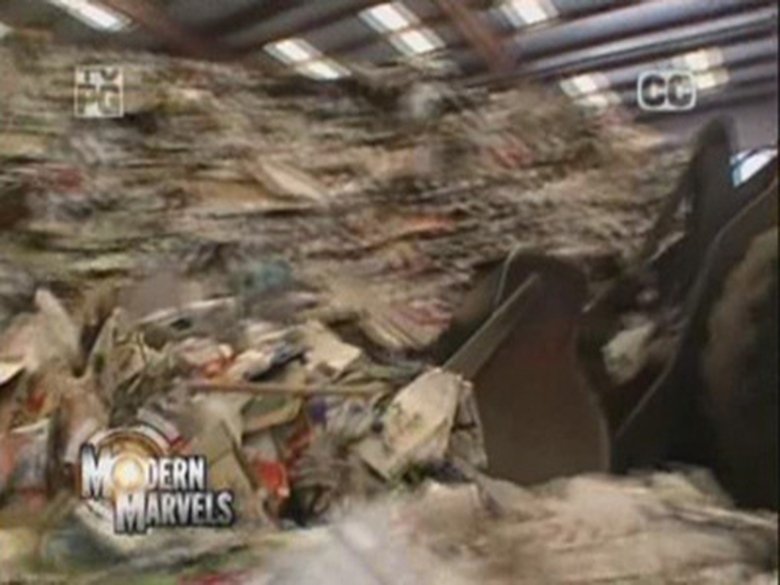
It’s the place where one man’s trash is truly another man’s treasure. Enter the strange and mysterious world of the junkyard, where many pieces actually do add up to a whole. Uncover how junkyard operators create order out of seemingly random piles of junk.
S09 E15 • Tuesday, Apr 16, 2002 • Apr 16 • 44m
October 7, 2001: Missiles from lethal U.S. jets rain down onto Afghanistan. One powerful and deadly plane led the majority of the assaults–the F-14 Tomcat, the world’s most complete military fighter. No other fighter jet carries the F-14′s unique combination of weapons. Its state-of-the-art system can spot an oncoming enemy plane at almost 200 miles. Its radar can detect targets as low as 50 feet and as high as 80,000 feet and does so three times faster than the radar of any other fighter jet.
S09 E16 • Thursday, Apr 18, 2002 • Apr 18 • 44m
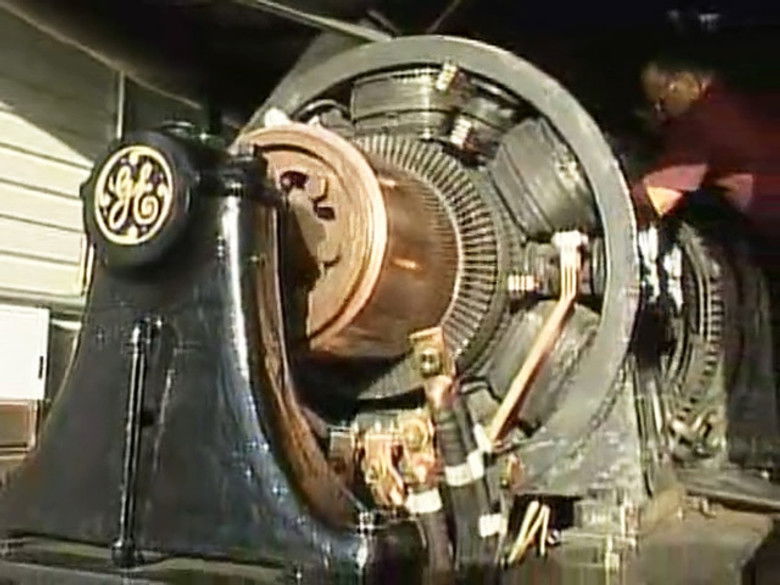
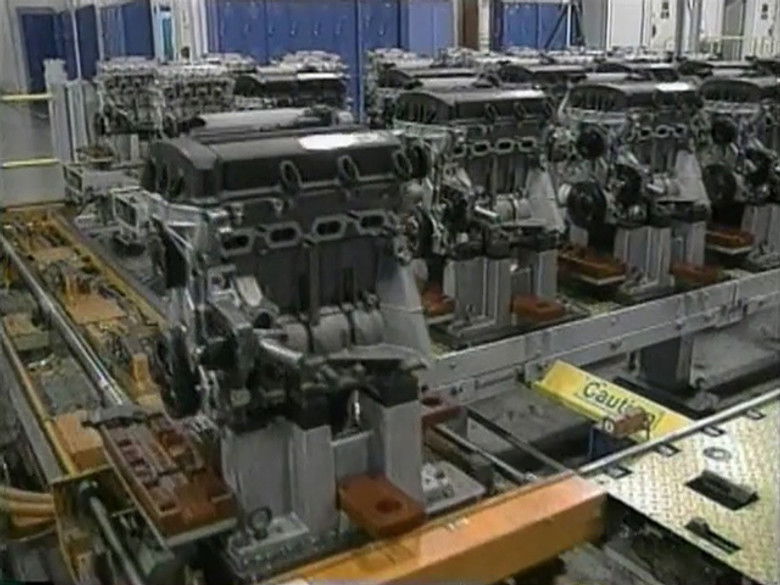
Story of the development of engines and motors, with particular emphasis on the ones that have profoundly changed society. Beginning with the steam engine, we see how it was created, how it works, and how it led to the Industrial Revolution. We review the electric motor, internal combustion engine, jet engine, and rocket engine, and conclude with a look at futuristic engine technologies, including hydrogen-powered cars and microtechnology engines so small that they fit on the tip of a finger.
S09 E17 • Tuesday, May 7, 2002 • May 7 • 44m
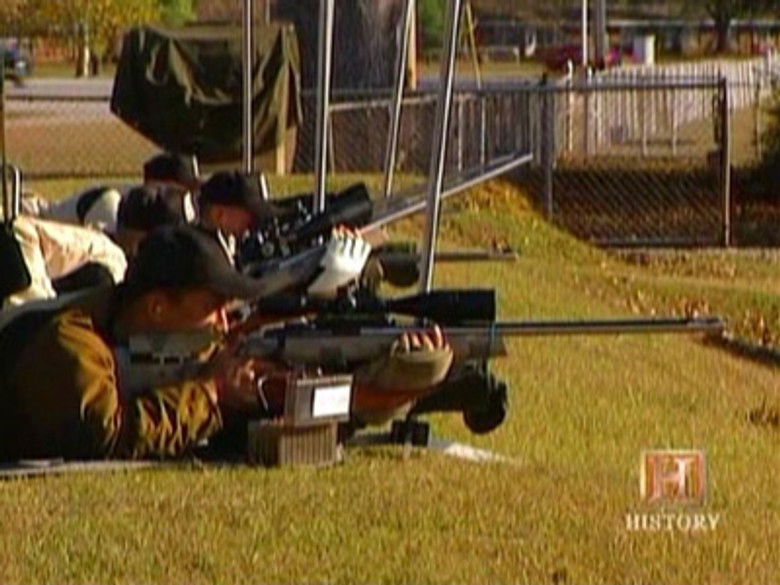
It’s known as the most powerful handgun in the world, made famous by Clint Eastwood in the Dirty Harry movies. But its origins stretch back more than a century to the Indian Wars of the American West and African safaris, where hunters stalked big game. Join us for a review of the history of the biggest, baddest gun available today–unlimited firepower at the pull of a trigger!
S09 E18 • Tuesday, May 14, 2002 • May 14 • 44m
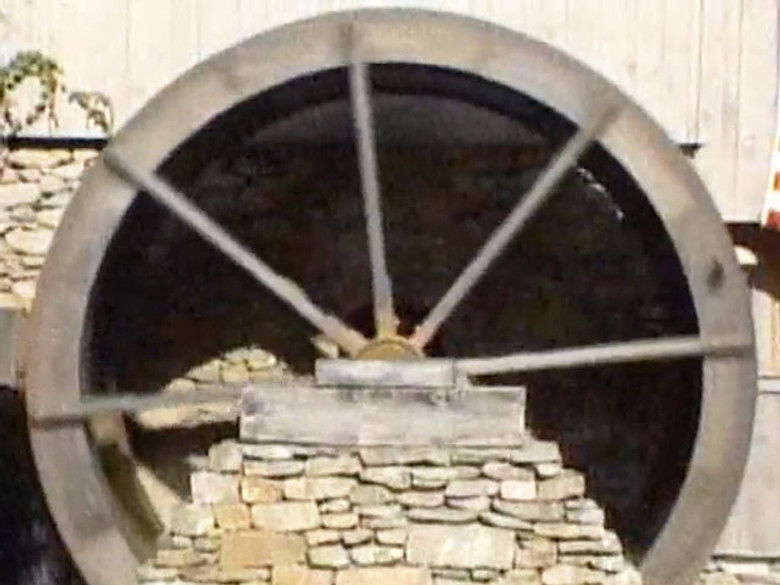
Spinning your wheels isn’t just going around in circles. In fact, it’s revolutionary–literally. The history of civilization has turned on the wheel, and we have traveled as far as we have because of it. One of the six simple machines and perhaps the most important invention in the history of mankind, the wheel has been essential in all aspects of life–from farming to fighting, traveling to trading. Features interviews with scientists, historians, philosophers, millers, potters, and spinners.

S09 E19 • Tuesday, May 21, 2002 • May 21 • 44m
Star City, the Gagarin Center for Training Cosmonauts, was established by the former Soviet Union in the 1960s as a school for the future conquerors of space. Today, it’s where Russian cosmonauts and international guests train on Soyuz rocket simulators and the MIR complex simulator. We join cosmonauts as they undergo grueling ground training in survival courses and parachuting, and face some of Star City’s toughest challenges–G-Force simulators, space orientation, and rescue training.

S09 E20 • Sunday, Jun 2, 2002 • Jun 2 • 44m
They are the toughest ships in the water, plowing headlong into one of nature’s hardest obstacles. Modern icebreakers can smash through 10-foot thick ice sheets without stopping, allowing scientists and commercial shipping access to some of earth’s most inhospitable spots. Join our bone-chilling journey as we patrol the Great Lakes on the USCG Cutter Makinaw and traverse the infamous Northwest Passage on the maiden voyage of the USCG Healy, the newest Polar Class Icebreaker in the U.S. Fleet.
S09 E21 • Tuesday, Jun 4, 2002 • Jun 4 • 44m
Who could imagine life without our "man-made weather"? On cold winter nights and hot summer days, we are forever grateful to the visionaries who took two basic elements–fire and ice–and turned them into true modern marvels. Fire warmed the caves and primitive dwellings of mankind for centuries, yet the technology of keeping cool lagged far behind as we learn in this chronicle of heating and air conditioning that covers advancements from the home and industry to outer space and beyond!
S09 E22 • Tuesday, Jun 11, 2002 • Jun 11 • 44m
Pop open the hood, check out the carbs, and hear the engines roar as we journey back to a time when gas was cheap, emission controls non-existent, and all that mattered was acceleration and speed. During the 1960s and ’70s, GM, Ford, and Chrysler competed to create high-performance cars at prices teenage baby boomers could afford. Featuring interviews with John DeLorean, creator of the Pontiac GTO, and his marketing partner Jim Wangers, we go behind the scene of the muscle-car wars.
S09 E23 • Wednesday, Jun 12, 2002 • Jun 12 • 44m
Blade implements have been a part of civilized man's arsenal since the Paleolithic Age, when sharp tools were chipped off of flint or obsidian. But with the discovery of metallurgy, people were able to forge stronger, more versatile blade implements. We visit an axe-throwing contest in Wisconsin for an introduction to the least subtle of the blade tools. Then we visit a swordsmith and an experienced swordfighter who work in traditional methods from ancient sources, and review the history of knives.

S09 E24 • Tuesday, Jun 18, 2002 • Jun 18 • 44m
Join us for a look at the biggest, heaviest, tallest, longest, meanest machines on the planet! We'll see what these monsters do and how they operate, and how they're designed and assembled. Machines investigated include the largest draglines, excavators used in mining; the biggest dump truck; a front-end loader with an 80-ton bucket and the largest tires of any vehicle; the cruise ship, the Voyager of the Seas; a 240-foot tall wind generator; and a fusion reaction machine the size of a football field.
S09 E25 • Thursday, Jun 20, 2002 • Jun 20 • 44m
Legendary drivers lead us on a record-breaking race through a century-long search for sheer acceleration that began before World War One, when hot-rodders modified Model-T Fords to see how fast they could go. Today’s dragsters can cover a quarter-mile from a standing start in 4.5 seconds, hitting top speeds above 330 mph. Top driver Gary Clapshaw shows us how to put together a modern dragster and revolutionary designer Bob Norwood unveils his newest car.
S09 E26 • Tuesday, Jun 25, 2002 • Jun 25 • 44m
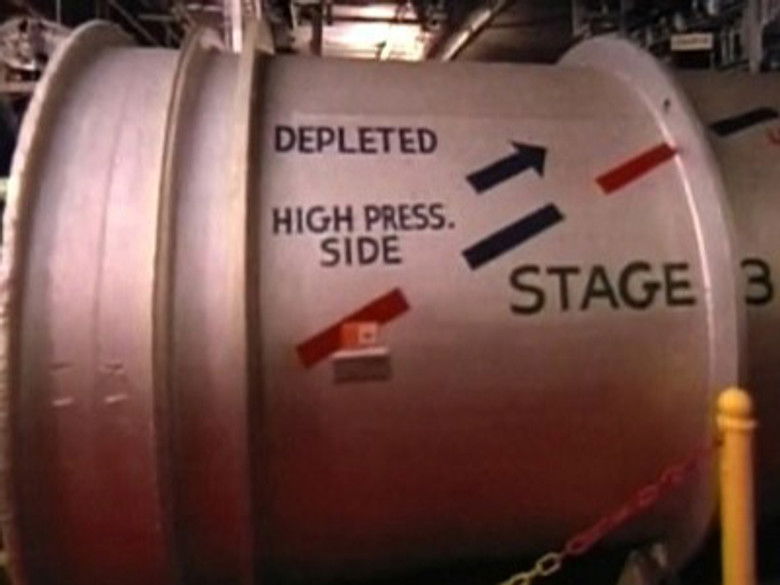
At 5:30 a.m., July 16, 1945, scientists and dignitaries awaited the detonation of the first atomic bomb in a desolate area of the New Mexico desert aptly known as "Jornada del Muerto" (Journey of Death). Dubbed the Manhattan Project, the top-secret undertaking was tackled with unprecedented speed and expense–almost $30-billion in today's money. Los Alamos scientists and engineers relate their trials, triumphs, and dark doubts about building the ultimate weapon of war in the interest of peace.
S09 E27 • Tuesday, Jul 2, 2002 • Jul 2 • 44m
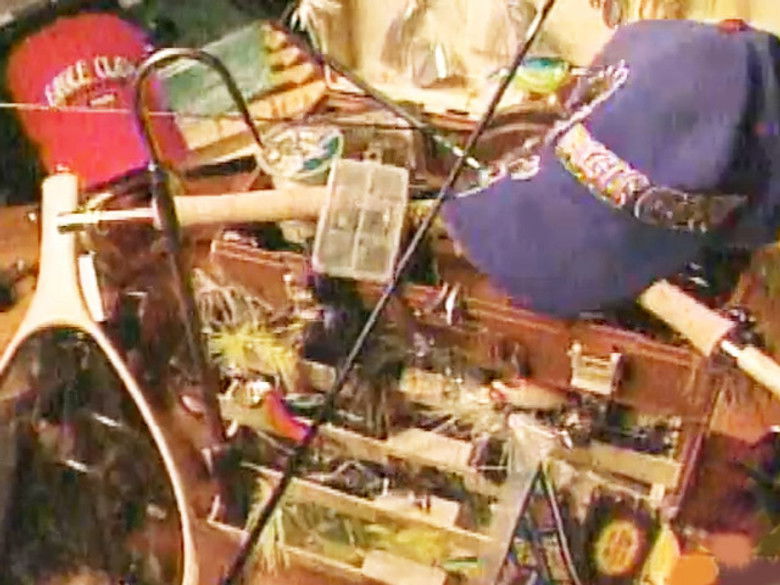
From ancient Egyptian fishing parties to today's high-tech bass tournaments, we untangle the fascinating technical history of man's quest to seduce creatures of the deep out of their watery world and into the frying pan. We trace the evolution of the basic rod and reel, from crude hickory poles with braided horsehair to ultra-light graphite wonder-rods with space-age nylon line, and examine the angler's glittering arsenal of spinners, spoons, plugs, and flies
S09 E28 • Monday, Jul 8, 2002 • Jul 8 • 44m
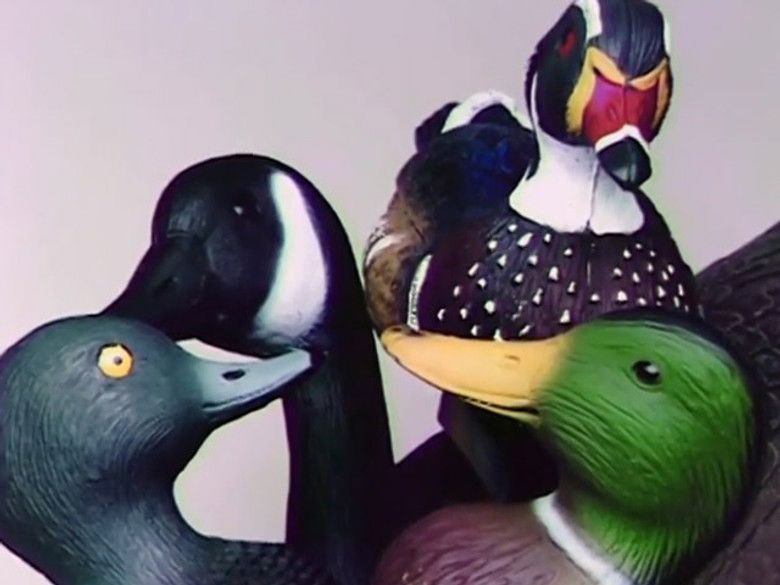
They are lethal tools that ensured our survival, altered our evolution, and maintained our dominion over other animals. Though hunting technology is the backbone of a multi-billion-dollar sports industry, current cutting-edge gear is a far cry from prehistoric man's rudimentary tools. From the crude knife to 24-hour digital cameras that monitor animal movement and earmuffs with microphones to amplify outside noise while blocking gunshot sound, we examine the development of hunting weapons and gear.

S09 E29 • Monday, Jul 15, 2002 • Jul 15 • 44m
From ancient hunters’ camouflage to computer-generated digital pattern uniforms, we uncover the past, present, and future of deception through disguise. During an ambush exercise by US Marines, we learn that camouflage came from natural coloration and patterns of flora and fauna. The art of military camouflage took off in WWI with the use of the airplane, when the French learnt to hide from “eyes in the sky”. It’s a world of shadows and smoke, where even cities disappear through disguise.
S09 E30 • Tuesday, Jul 16, 2002 • Jul 16 • 44m
Though they duplicate the real world for fun and fantasy, models are not always toys and they’re not always tiny. We explore the magic of these fascinating replicas–from the Rover and Lander models for the Mars Exploration Project to ancient Egyptian ship models found in tombs to English ship models from the Age of Sail. We also look at the rage for hobby modeling, with Lionel trains leading the pack, watch models go to war with scale warplanes in WWII, and invade science fiction films.

S09 E31 • Tuesday, Jul 23, 2002 • Jul 23 • 44m
Come in for a smooth landing as we explore the history of hangars–stark, massive structures that house and protect flight vehicles. We visit the first hangar, built on a German lake; Boeing’s Delta 4 rocket hangar; Hangar Number One in Lakehurst, New Jersey, that housed all US airships built in the 1920s and ’30s; and the Space Shuttle’s hangar–as big as four skyscrapers! Back in Germany, Cargolifter’s mammoth hangar, large enough to enclose the Superdome, signals the rebirth of an industry.
S09 E32 • Wednesday, Jul 24, 2002 • Jul 24 • 44m
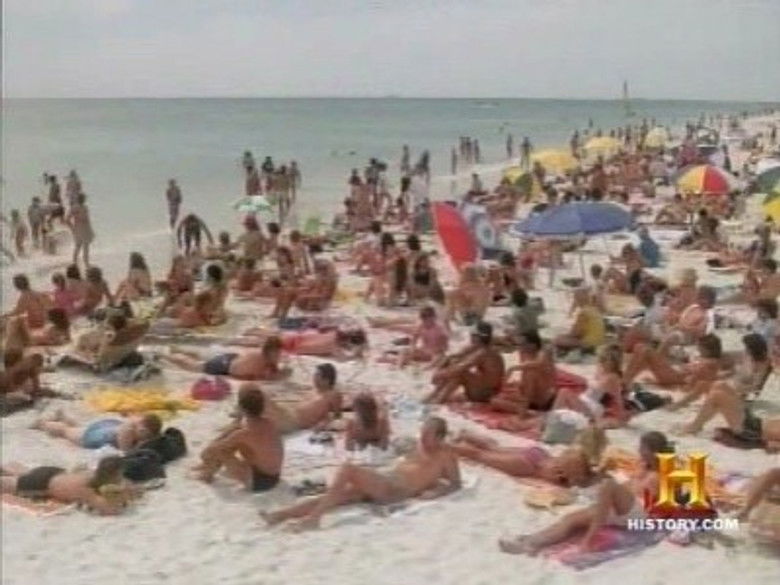
Slap on your sun block and head to the ocean for a sizzling hour that explores the beach in a whole new way! We cover everything from Japan’s Seagaia, the world’s largest indoor beach, to boardwalks, dune buggies, surfboards, sunglasses, suntan lotion, wave pools, and more. We examine the development of each product and explain the technological advances that have been made over the years.
S09 E33 • Tuesday, Aug 6, 2002 • Aug 6 • 44m
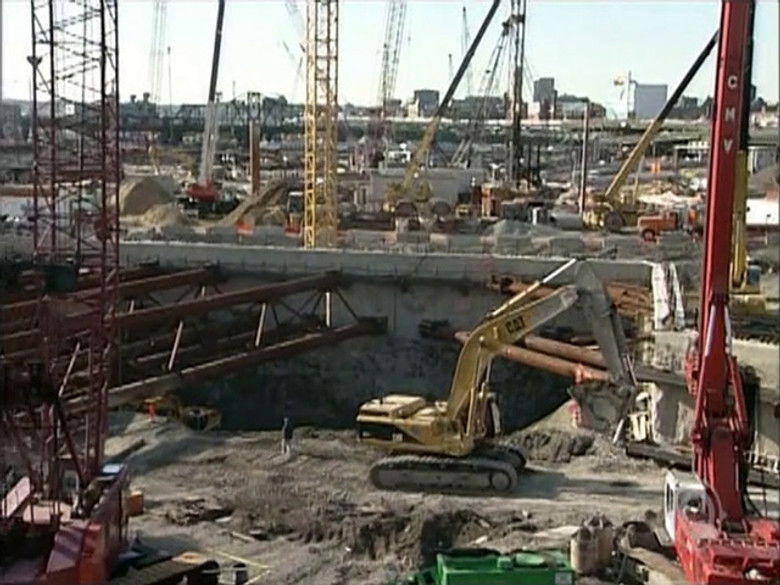
The Massachusetts Central Artery/Tunnel Project, a.k.a. The Big Dig, is the most amazing municipal construction project in U.S. history. Its objective–to replace Boston’s decaying highway infrastructure with 160 new highway miles, half of which run underground and underwater. After 14 years construction, its cost–$11 billion!

S09 E34 • Thursday, Aug 8, 2002 • Aug 8 • 44m
They are the cutting edge in firearm technology. They fight simulated battles on computers, decades before a shot is fired. But will they make the world safer…or more dangerous than ever before? They are Super Guns of Today and Tomorrow.
S09 E35 • Tuesday, Aug 13, 2002 • Aug 13 • 44m
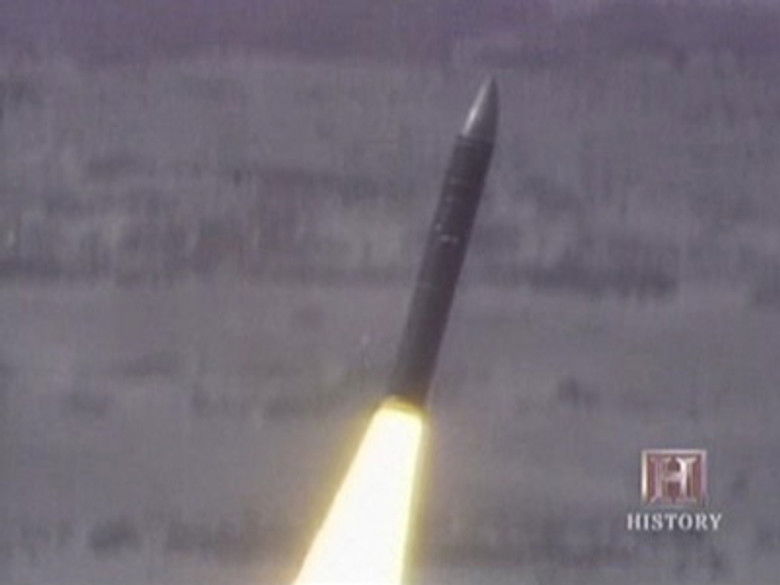
With the ironic motto "Peace is our Profession", the Strategic Air Command was in charge of US nuclear forces from 1946 to 1992. SAC was the ultimate Cold War military machine, at its height controlling thousands of nuclear weapons, planes, and missiles, and boasting over a quarter-million personnel. We travel to the Strategic Air and Space Museum, located 20 miles from SAC's old headquarters in Nebraska, and walk through the cavernous bomb bay of SAC's workhorse, the B-52 Bomber.

S09 E36 • Wednesday, Aug 14, 2002 • Aug 14 • 44m
Traces the history and evolution of the world’s most important fossil fuel. Without gasoline, modern life would grind to a halt. Americans use about 360-million gallons of gas every day. And though most of us could not function without gas, very few understand what it really is, how it is made, what all those different octane numbers really mean, and how researchers developed cleaner burning gasoline. All these questions will be answered as we look at the history of this “supreme” fuel.
S09 E37 • Thursday, Aug 15, 2002 • Aug 15 • 44m
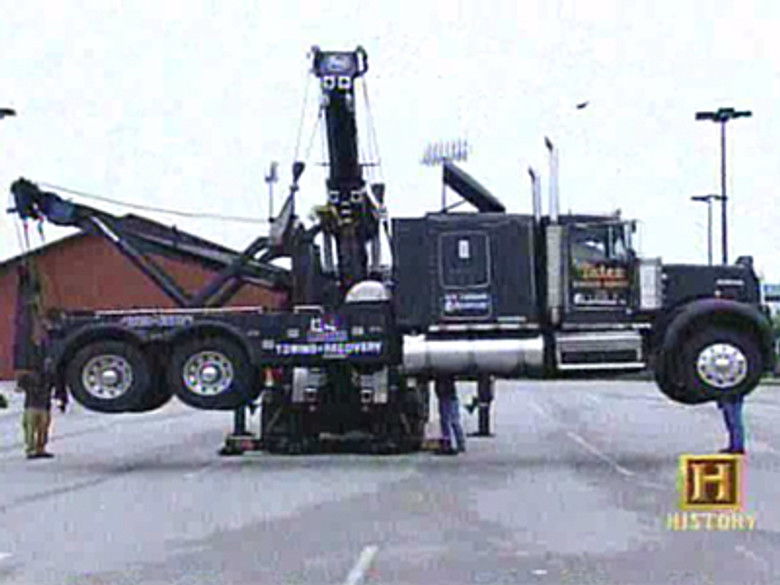
Think you know towing? As simple as engaging a tow man when your car is stalled? From mighty tugboats that guide massive ships safely into port, dizzying roller coasters that send cars careening up and down hills, to funicular railroads that climb mountainsides, when it comes to towing, being a "drag" was never so good! We also watch a 125-year-old church as it's towed on the back of a flatbed truck, and rocket towards space as we're hauled 20,000 feet-high behind a Boeing 747!

S09 E38 • Wednesday, Aug 21, 2002 • Aug 21 • 44m
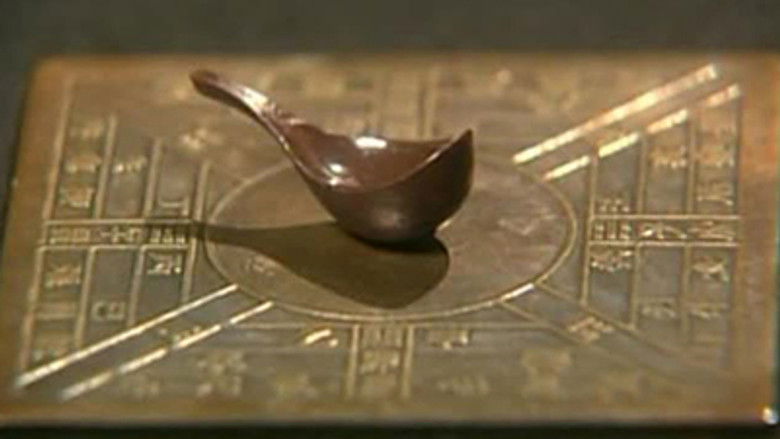
This program will tell the story of jet propulsion, which has radically transformed our world since it was first introduced near the end of World War II. We’ll trace the development of jet-powered aircraft from the Nazi’s first operational fighter, the Me 262, to the supersonic Concorde, to the latest U.S. jet fighter, the F-22 — and beyond, to the fighters and passenger planes of the future, which will be powered by new jet engines on the drawing boards (like the “scram-jet” — designed for a new hypersonic transport plane that would switch to rocket power once outside the earth’s atmosphere).
S09 E39 • Tuesday, Aug 27, 2002 • Aug 27 • 44m
It was the world’s largest underground factory–seven miles of tunnels built to manufacture Hitler’s secret weapons, primarily the V-2 rocket. But Nordhausen kept more than one secret. Technology and torture went hand-in-hand–25,000 concentration camp workers died there–and some of those associated with Nordhausen later helped take America to the moon.
S09 E40 • Friday, Aug 30, 2002 • Aug 30 • 44m
Examines how the great 19th-century peacetime invention developed into a powerful war machine, forever altering how, when, where, and why battles were fought. Also looks at the brave men and women who kept the military Iron Horses running, often at their own peril.
S09 E41 • Tuesday, Sep 10, 2002 • Sep 10 • 44m
Between 1941 and 1945, U.S. shipyards built more shipping tonnage than had been previously produced in the history of the world. American industrialists like Henry Kaiser transformed the nation’s shipyards into mass production facilities in a matter of months. Ships that had once taken years to build now only took weeks to construct. This record pace of producing ships is one of the most remarkable stories in the history of American industry. This episode utilizes rare color film obtained from the National Archives as well as principle photography taken on board World War II Liberty Ships and aircraft carriers that remain afloat today.
S09 E42 • Tuesday, Sep 17, 2002 • Sep 17 • 44m
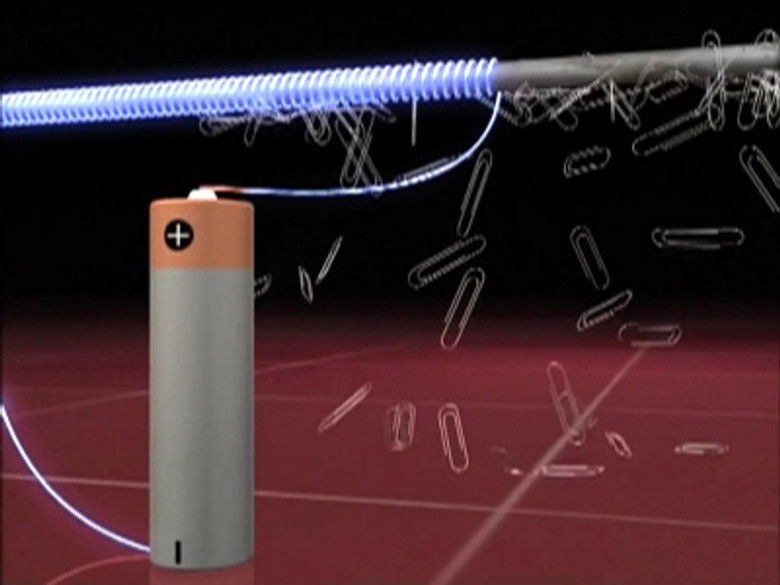
We played with them as children, but the world of magnets isn’t kid’s stuff! The pervasive magnet serves as the underpinning for much of modern technology. They can be found in computers, cars, phones, VCRs, TVs, vacuum cleaners, the washer and dryer, the ubiquitous refrigerator magnet, and even in an electric guitar! On the cutting-edge of technology, scientists experiment with a variety of magnets. Magnets’ amazing forces of attraction and repulsion may take us to the far reaches of outer space.
S09 E43 • Wednesday, Sep 18, 2002 • Sep 18 • 44m
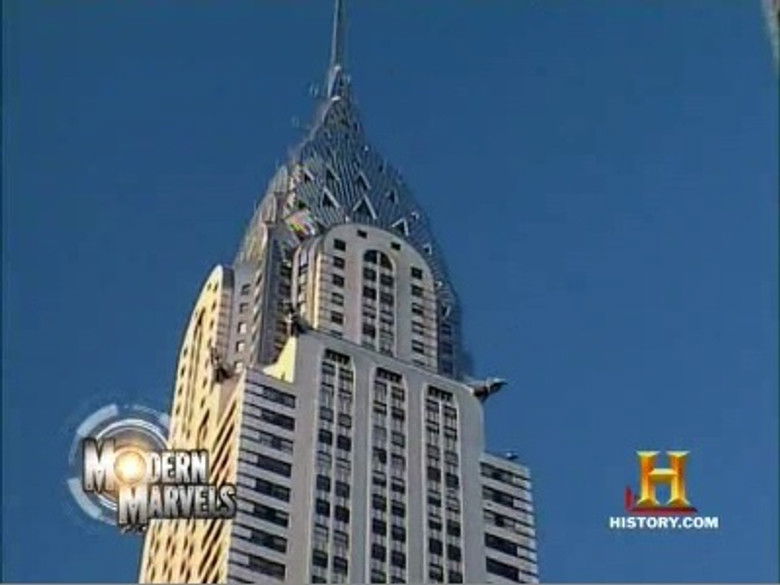
The 1,046-foot Chrysler Building in New York City, erected between 1928 and 1930, was the world's tallest edifice–until the Empire State Building eclipsed it in 1931! Since then, this Art Deco masterpiece has become one of the most beloved skyscrapers on the city skyline. Financed by auto tycoon Walter P. Chrysler and designed by architect William Van Alen, the private office building was constructed by more than 2,000 men. Find out why it was the first–and last–skyscraper Van Alen designed.

S09 E44 • Friday, Sep 20, 2002 • Sep 20 • 44m
Imagine a superhighway designed for speed…thousands of miles of roadway unhindered by limits of any kind. Buckle up for safety as we take you for the ride of your life when we explore the fascinating history and current reality of the world’s fastest freeway. The number-one works project of the Third Reich, the Autobahn was known as Adolf Hitler’s Road until Germany’s defeat in WWII. Reconstructed and extended to more than four times its original size, it became a symbol of the New Germany.

S09 E45 • Friday, Sep 27, 2002 • Sep 27 • 44m
From the outhouse to the smart house, our lives have improved drastically in the last 150 years. Convenience and comfort have always been considerations in home design. Yet, it is often these everyday appliances and gadgets that we take for granted. In Household Wonders II, we’ll take a peek into one of today’s fully-automated homes that is so smart, the owner can operate everything from the home theater to the outdoor waterfall at a push of one button.
S09 E46 • Tuesday, Oct 8, 2002 • Oct 8 • 44m
One of the most useful machines ever created, the crane is a simple but important combination of the pulley and the lever. Though cranes have been helping us build civilization from at least the time of the Egyptian pyramids, the modern steel-framed construction cranes are a relatively recent development. Put on your work boots as we ride through the history of cranes from ancient days to skyscraper construction sites, ocean-freighter docks, and the International Space Station.

S09 E47 • Wednesday, Oct 9, 2002 • Oct 9 • 44m
Over 200-million people around the world use the Internet–yet no one owns or controls it. Its phenomenal usage puts it on a par with the printing press as a civilization-shaping invention. Follow the rise of the Net as a humble defense department research project to its stature as the number one communications tool for the future.
S09 E48 • Thursday, Oct 10, 2002 • Oct 10 • 44m
An exciting series that takes viewers into the heart of action as it focuses on a particular machine from WWII, beginning with the story of its design and manufacture and showing the machine in combat, using vintage archive footage. Miniature cameras take viewers inside the machine to share with its crew the experience of war. In this episode, ride along in the thick of battle in the American M4 Sherman Tank, as it blasts its way into history and paves the way for the liberation of Europe.
S09 E49 • Tuesday, Oct 22, 2002 • Oct 22 • 44m
Throughout railroad history, disasters lay at the heart of progress since expansion and profit proved the main goals of management. In 1875 alone, an average of 22 train accidents happened daily; in 1890, over 6,000 people were killed. We’ll examine how safety, once a secondary consideration, became a primary goal.
S09 E50 • Monday, Oct 28, 2002 • Oct 28 • 44m
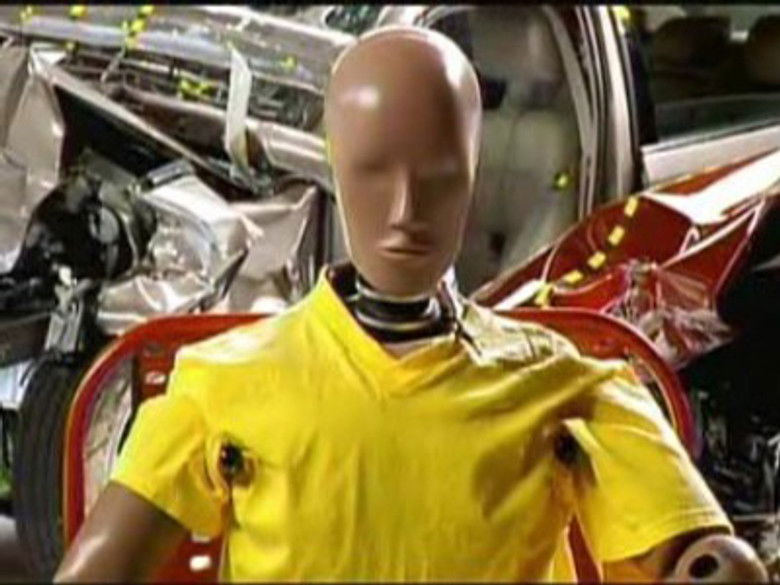
The crash test dummy, patron saint of vulnerable motorists, has become a modern icon and is a potent symbol of safety in a risk-obsessed age. But what’s the real story behind this blank-faced semi-human? From a case of mistaken identity in the Roswell UFO incident, to the U.S. military’s top-secret research and development programs of the 1950s, to a series of highly sensitive experiments on humans, animals, and corpses, we chart the bizarre and often gruesome life of this mechanical humanoid.
2002 • 60 Episodes
S09 E01 • Wednesday, Jan 2, 2002 • Jan 2 • 44m
From Pilgrim brew masters to early commercial ventures to today's monolithic corporations, we'll imbibe American beer's long history, focusing on the commercial brewing industry that developed in the 19th century and continues to today. We'll also taste social experiments from the past, like the Temperance Movement and Prohibition, to see how they left scars on the industry and continue to influence sobriety today.
S09 E02 • Thursday, Jan 17, 2002 • Jan 17 • 44m
Flight was born in America at the turn of the 20th century. But WWII saw more planes built in a single year–300,000–than had been built in the previous 40. Footage of restored aircraft, historic film ranging from factory floors to dogfights, and interviews with pilots and designers recapture the aviation industry's finest hour.
S09 E03 • Monday, Jan 28, 2002 • Jan 28 • 44m
Winchester…the name still evokes images of the Wild West and the taming of the frontier–it was the first reliable repeating rifle and settlers brought it along as they moved west. Prized by Civil War soldiers, the lever-action rifle was preferred by lawmen and outlaws alike. A classic Winchester can command upwards of $100,000 from collectors trying to buy a piece of the Old West. We see how a shirt manufacturer named Oliver Winchester became the most famous gun maker of the American West.
S09 E04 • Tuesday, Jan 29, 2002 • Jan 29 • 44m
The rousing story of the tank, from its primitive appearance in WWI to the high-tech world of modern tank warfare, with emphasis on the tank’s Golden Age during WWII. In the second hour, we’ll look at the American soldier’s best friend in WWII–the Jeep. A “Blitz Buggy” could serve as a combat car, snowplow, or ambulance!
S09 E05 • Wednesday, Jan 30, 2002 • Jan 30 • 44m
Here is the heroic story of a intrepid band of infantry soldiers, the "Tunnel Rats", charged with a daring mission–to search for, find, and destroy a secret subterranean network of enemy tunnels in Vietnam. Armed with only a flashlight, valor, and a .45, they faced a determined foe and overcame lethal odds, uncovering secret enemy arms and intelligence caches. Tragically, many of these volunteers died and others were seriously wounded on this terrifying suicide mission.
S09 E06 • Thursday, Jan 31, 2002 • Jan 31 • 44m
From the early “egg beaters” of World War II to the “flying tanks” of Operation Desert Storm, we’ll fly aboard one of the most agile and potent weapons on the battlefield–the helicopter. Meet the first pilot to fly a combat rescue mission in WWII and a U.S.A.F. female aviator; and view classified footage of the Apache in Iraq.
S09 E07 • Friday, Feb 1, 2002 • Feb 1 • 44m
From today’s ultra chic, state-of-the-art private jets to Lockheed’s 1957 Jetstar, this 2-hour special investigates the history, the luxury, and technology of America’s corporate jets. We meet a few of the men and women who pioneered them–Bill Lear, Clyde Cessna and his nephews, Walter and Olive Beech. Actor Michael Dorn explains what it takes to buy a previously-owned jet. And, we see the latest in kit jets and look into the new must-have of the super rich–jets the size of commercial airliners.
S09 E08 • Tuesday, Feb 19, 2002 • Feb 19 • 44m
His movies are legend, his women beautiful, and his toys the best in the world. Whether James Bond is foiling villains in space-age flying machines or eavesdropping on his enemies with ultra-sophisticated spy gear, British Secret Agent 007 is always guaranteed to have the most outrageous and wonderfully creative gadgets ever to grace the silver screen. Bond had it all. But as we see in this exclusive look at his gadgets, it takes a lot to save the world!
S09 E09 • Tuesday, Feb 26, 2002 • Feb 26 • 44m
Press a button and you can soar in the sky, command a virtual pet, adjust the thermostat in your house while driving in your car, and, of course, change the channel on your TV. The remote control revolution began in 1898, when inventor Nikola Tesla successfully controlled a 6-foot-long iron-hulled model boat using radio waves. Today, Microbots are the latest remote control marvel. We'll see how, in our technologically-evolved world, pressing a button to get what we want has become commonplace.
S09 E10 • Tuesday, Mar 5, 2002 • Mar 5 • 44m
For millennia, luxury toys have functioned as flashy instruments of affluence, authority, and identity and driven many kingly consumers to covet, create, and purchase these status symbols. From the Roman Emperor Caligula’s special barges to Carl Faberge’s impossibly intricate eggs, from plasma screen TVs to $600,000 Bentleys and Rolex watches, we examine spectacular personal possessions–paeans to the lords of a consumer culture that grows richer and technologically more sophisticated daily.
S09 E11 • Tuesday, Mar 12, 2002 • Mar 12 • 44m
As we power-up and unfurl the sails on a magical cruise through time, viewers meet the people who’ve devoted their lives to pleasure boating. Traveling throughout the U.S. and Europe, we delve into a world of luxury, adventure, and sport on spectacular vessels ranging from classic yachts to sports boats to the ultimate floating palaces. In this timeless pastime, technological wonders continue to evolve and enthrall.
S09 E12 • Tuesday, Mar 19, 2002 • Mar 19 • 44m
How do you stop a speeding bullet? From body armor to armored cars and trucks, we review the history of the race between the bullet and a successful way to stop it. It's not exactly easy to design material that can catch gunfire traveling up to 3,000 feet per second. We'll look at little-known advances like bulletproof layering hidden in walls, futuristic smart materials that "remember" how to stop a bullet, and a system that deploys a shield within milliseconds when it detects an oncoming round.
S09 E13 • Tuesday, Mar 26, 2002 • Mar 26 • 44m
A look at siege machines that convert energy into mechanical force to go over, under, or through fortified or fixed defenses too strong for conventional force. These engines range from man's first long-range missile weapon, the slingshot, to the laser cannons and satellite-destroying robots of the 21st century. All of these machines are designed to breach barriers–castle walls, entrenched troops, even outer space. When the going gets tough, the tough get siege machines.
S09 E14 • Tuesday, Apr 9, 2002 • Apr 9 • 44m
It’s the place where one man’s trash is truly another man’s treasure. Enter the strange and mysterious world of the junkyard, where many pieces actually do add up to a whole. Uncover how junkyard operators create order out of seemingly random piles of junk.
S09 E15 • Tuesday, Apr 16, 2002 • Apr 16 • 44m
October 7, 2001: Missiles from lethal U.S. jets rain down onto Afghanistan. One powerful and deadly plane led the majority of the assaults–the F-14 Tomcat, the world’s most complete military fighter. No other fighter jet carries the F-14′s unique combination of weapons. Its state-of-the-art system can spot an oncoming enemy plane at almost 200 miles. Its radar can detect targets as low as 50 feet and as high as 80,000 feet and does so three times faster than the radar of any other fighter jet.
S09 E16 • Thursday, Apr 18, 2002 • Apr 18 • 44m
Story of the development of engines and motors, with particular emphasis on the ones that have profoundly changed society. Beginning with the steam engine, we see how it was created, how it works, and how it led to the Industrial Revolution. We review the electric motor, internal combustion engine, jet engine, and rocket engine, and conclude with a look at futuristic engine technologies, including hydrogen-powered cars and microtechnology engines so small that they fit on the tip of a finger.
S09 E17 • Tuesday, May 7, 2002 • May 7 • 44m
It’s known as the most powerful handgun in the world, made famous by Clint Eastwood in the Dirty Harry movies. But its origins stretch back more than a century to the Indian Wars of the American West and African safaris, where hunters stalked big game. Join us for a review of the history of the biggest, baddest gun available today–unlimited firepower at the pull of a trigger!
S09 E18 • Tuesday, May 14, 2002 • May 14 • 44m
Spinning your wheels isn’t just going around in circles. In fact, it’s revolutionary–literally. The history of civilization has turned on the wheel, and we have traveled as far as we have because of it. One of the six simple machines and perhaps the most important invention in the history of mankind, the wheel has been essential in all aspects of life–from farming to fighting, traveling to trading. Features interviews with scientists, historians, philosophers, millers, potters, and spinners.
S09 E19 • Tuesday, May 21, 2002 • May 21 • 44m
Star City, the Gagarin Center for Training Cosmonauts, was established by the former Soviet Union in the 1960s as a school for the future conquerors of space. Today, it’s where Russian cosmonauts and international guests train on Soyuz rocket simulators and the MIR complex simulator. We join cosmonauts as they undergo grueling ground training in survival courses and parachuting, and face some of Star City’s toughest challenges–G-Force simulators, space orientation, and rescue training.
S09 E20 • Sunday, Jun 2, 2002 • Jun 2 • 44m
They are the toughest ships in the water, plowing headlong into one of nature’s hardest obstacles. Modern icebreakers can smash through 10-foot thick ice sheets without stopping, allowing scientists and commercial shipping access to some of earth’s most inhospitable spots. Join our bone-chilling journey as we patrol the Great Lakes on the USCG Cutter Makinaw and traverse the infamous Northwest Passage on the maiden voyage of the USCG Healy, the newest Polar Class Icebreaker in the U.S. Fleet.
S09 E21 • Tuesday, Jun 4, 2002 • Jun 4 • 44m
Who could imagine life without our "man-made weather"? On cold winter nights and hot summer days, we are forever grateful to the visionaries who took two basic elements–fire and ice–and turned them into true modern marvels. Fire warmed the caves and primitive dwellings of mankind for centuries, yet the technology of keeping cool lagged far behind as we learn in this chronicle of heating and air conditioning that covers advancements from the home and industry to outer space and beyond!
S09 E22 • Tuesday, Jun 11, 2002 • Jun 11 • 44m
Pop open the hood, check out the carbs, and hear the engines roar as we journey back to a time when gas was cheap, emission controls non-existent, and all that mattered was acceleration and speed. During the 1960s and ’70s, GM, Ford, and Chrysler competed to create high-performance cars at prices teenage baby boomers could afford. Featuring interviews with John DeLorean, creator of the Pontiac GTO, and his marketing partner Jim Wangers, we go behind the scene of the muscle-car wars.
S09 E23 • Wednesday, Jun 12, 2002 • Jun 12 • 44m
Blade implements have been a part of civilized man's arsenal since the Paleolithic Age, when sharp tools were chipped off of flint or obsidian. But with the discovery of metallurgy, people were able to forge stronger, more versatile blade implements. We visit an axe-throwing contest in Wisconsin for an introduction to the least subtle of the blade tools. Then we visit a swordsmith and an experienced swordfighter who work in traditional methods from ancient sources, and review the history of knives.
S09 E24 • Tuesday, Jun 18, 2002 • Jun 18 • 44m
Join us for a look at the biggest, heaviest, tallest, longest, meanest machines on the planet! We'll see what these monsters do and how they operate, and how they're designed and assembled. Machines investigated include the largest draglines, excavators used in mining; the biggest dump truck; a front-end loader with an 80-ton bucket and the largest tires of any vehicle; the cruise ship, the Voyager of the Seas; a 240-foot tall wind generator; and a fusion reaction machine the size of a football field.
S09 E25 • Thursday, Jun 20, 2002 • Jun 20 • 44m
Legendary drivers lead us on a record-breaking race through a century-long search for sheer acceleration that began before World War One, when hot-rodders modified Model-T Fords to see how fast they could go. Today’s dragsters can cover a quarter-mile from a standing start in 4.5 seconds, hitting top speeds above 330 mph. Top driver Gary Clapshaw shows us how to put together a modern dragster and revolutionary designer Bob Norwood unveils his newest car.
S09 E26 • Tuesday, Jun 25, 2002 • Jun 25 • 44m
At 5:30 a.m., July 16, 1945, scientists and dignitaries awaited the detonation of the first atomic bomb in a desolate area of the New Mexico desert aptly known as "Jornada del Muerto" (Journey of Death). Dubbed the Manhattan Project, the top-secret undertaking was tackled with unprecedented speed and expense–almost $30-billion in today's money. Los Alamos scientists and engineers relate their trials, triumphs, and dark doubts about building the ultimate weapon of war in the interest of peace.
S09 E27 • Tuesday, Jul 2, 2002 • Jul 2 • 44m
From ancient Egyptian fishing parties to today's high-tech bass tournaments, we untangle the fascinating technical history of man's quest to seduce creatures of the deep out of their watery world and into the frying pan. We trace the evolution of the basic rod and reel, from crude hickory poles with braided horsehair to ultra-light graphite wonder-rods with space-age nylon line, and examine the angler's glittering arsenal of spinners, spoons, plugs, and flies
S09 E28 • Monday, Jul 8, 2002 • Jul 8 • 44m
They are lethal tools that ensured our survival, altered our evolution, and maintained our dominion over other animals. Though hunting technology is the backbone of a multi-billion-dollar sports industry, current cutting-edge gear is a far cry from prehistoric man's rudimentary tools. From the crude knife to 24-hour digital cameras that monitor animal movement and earmuffs with microphones to amplify outside noise while blocking gunshot sound, we examine the development of hunting weapons and gear.
S09 E29 • Monday, Jul 15, 2002 • Jul 15 • 44m
From ancient hunters’ camouflage to computer-generated digital pattern uniforms, we uncover the past, present, and future of deception through disguise. During an ambush exercise by US Marines, we learn that camouflage came from natural coloration and patterns of flora and fauna. The art of military camouflage took off in WWI with the use of the airplane, when the French learnt to hide from “eyes in the sky”. It’s a world of shadows and smoke, where even cities disappear through disguise.
S09 E30 • Tuesday, Jul 16, 2002 • Jul 16 • 44m
Though they duplicate the real world for fun and fantasy, models are not always toys and they’re not always tiny. We explore the magic of these fascinating replicas–from the Rover and Lander models for the Mars Exploration Project to ancient Egyptian ship models found in tombs to English ship models from the Age of Sail. We also look at the rage for hobby modeling, with Lionel trains leading the pack, watch models go to war with scale warplanes in WWII, and invade science fiction films.
S09 E31 • Tuesday, Jul 23, 2002 • Jul 23 • 44m
Come in for a smooth landing as we explore the history of hangars–stark, massive structures that house and protect flight vehicles. We visit the first hangar, built on a German lake; Boeing’s Delta 4 rocket hangar; Hangar Number One in Lakehurst, New Jersey, that housed all US airships built in the 1920s and ’30s; and the Space Shuttle’s hangar–as big as four skyscrapers! Back in Germany, Cargolifter’s mammoth hangar, large enough to enclose the Superdome, signals the rebirth of an industry.
S09 E32 • Wednesday, Jul 24, 2002 • Jul 24 • 44m
Slap on your sun block and head to the ocean for a sizzling hour that explores the beach in a whole new way! We cover everything from Japan’s Seagaia, the world’s largest indoor beach, to boardwalks, dune buggies, surfboards, sunglasses, suntan lotion, wave pools, and more. We examine the development of each product and explain the technological advances that have been made over the years.
S09 E33 • Tuesday, Aug 6, 2002 • Aug 6 • 44m
The Massachusetts Central Artery/Tunnel Project, a.k.a. The Big Dig, is the most amazing municipal construction project in U.S. history. Its objective–to replace Boston’s decaying highway infrastructure with 160 new highway miles, half of which run underground and underwater. After 14 years construction, its cost–$11 billion!
S09 E34 • Thursday, Aug 8, 2002 • Aug 8 • 44m
They are the cutting edge in firearm technology. They fight simulated battles on computers, decades before a shot is fired. But will they make the world safer…or more dangerous than ever before? They are Super Guns of Today and Tomorrow.
S09 E35 • Tuesday, Aug 13, 2002 • Aug 13 • 44m
With the ironic motto "Peace is our Profession", the Strategic Air Command was in charge of US nuclear forces from 1946 to 1992. SAC was the ultimate Cold War military machine, at its height controlling thousands of nuclear weapons, planes, and missiles, and boasting over a quarter-million personnel. We travel to the Strategic Air and Space Museum, located 20 miles from SAC's old headquarters in Nebraska, and walk through the cavernous bomb bay of SAC's workhorse, the B-52 Bomber.
S09 E36 • Wednesday, Aug 14, 2002 • Aug 14 • 44m
Traces the history and evolution of the world’s most important fossil fuel. Without gasoline, modern life would grind to a halt. Americans use about 360-million gallons of gas every day. And though most of us could not function without gas, very few understand what it really is, how it is made, what all those different octane numbers really mean, and how researchers developed cleaner burning gasoline. All these questions will be answered as we look at the history of this “supreme” fuel.
S09 E37 • Thursday, Aug 15, 2002 • Aug 15 • 44m
Think you know towing? As simple as engaging a tow man when your car is stalled? From mighty tugboats that guide massive ships safely into port, dizzying roller coasters that send cars careening up and down hills, to funicular railroads that climb mountainsides, when it comes to towing, being a "drag" was never so good! We also watch a 125-year-old church as it's towed on the back of a flatbed truck, and rocket towards space as we're hauled 20,000 feet-high behind a Boeing 747!
S09 E38 • Wednesday, Aug 21, 2002 • Aug 21 • 44m
This program will tell the story of jet propulsion, which has radically transformed our world since it was first introduced near the end of World War II. We’ll trace the development of jet-powered aircraft from the Nazi’s first operational fighter, the Me 262, to the supersonic Concorde, to the latest U.S. jet fighter, the F-22 — and beyond, to the fighters and passenger planes of the future, which will be powered by new jet engines on the drawing boards (like the “scram-jet” — designed for a new hypersonic transport plane that would switch to rocket power once outside the earth’s atmosphere).
S09 E39 • Tuesday, Aug 27, 2002 • Aug 27 • 44m
It was the world’s largest underground factory–seven miles of tunnels built to manufacture Hitler’s secret weapons, primarily the V-2 rocket. But Nordhausen kept more than one secret. Technology and torture went hand-in-hand–25,000 concentration camp workers died there–and some of those associated with Nordhausen later helped take America to the moon.
S09 E40 • Friday, Aug 30, 2002 • Aug 30 • 44m
Examines how the great 19th-century peacetime invention developed into a powerful war machine, forever altering how, when, where, and why battles were fought. Also looks at the brave men and women who kept the military Iron Horses running, often at their own peril.
S09 E41 • Tuesday, Sep 10, 2002 • Sep 10 • 44m
Between 1941 and 1945, U.S. shipyards built more shipping tonnage than had been previously produced in the history of the world. American industrialists like Henry Kaiser transformed the nation’s shipyards into mass production facilities in a matter of months. Ships that had once taken years to build now only took weeks to construct. This record pace of producing ships is one of the most remarkable stories in the history of American industry. This episode utilizes rare color film obtained from the National Archives as well as principle photography taken on board World War II Liberty Ships and aircraft carriers that remain afloat today.
S09 E42 • Tuesday, Sep 17, 2002 • Sep 17 • 44m
We played with them as children, but the world of magnets isn’t kid’s stuff! The pervasive magnet serves as the underpinning for much of modern technology. They can be found in computers, cars, phones, VCRs, TVs, vacuum cleaners, the washer and dryer, the ubiquitous refrigerator magnet, and even in an electric guitar! On the cutting-edge of technology, scientists experiment with a variety of magnets. Magnets’ amazing forces of attraction and repulsion may take us to the far reaches of outer space.
S09 E43 • Wednesday, Sep 18, 2002 • Sep 18 • 44m
The 1,046-foot Chrysler Building in New York City, erected between 1928 and 1930, was the world's tallest edifice–until the Empire State Building eclipsed it in 1931! Since then, this Art Deco masterpiece has become one of the most beloved skyscrapers on the city skyline. Financed by auto tycoon Walter P. Chrysler and designed by architect William Van Alen, the private office building was constructed by more than 2,000 men. Find out why it was the first–and last–skyscraper Van Alen designed.
S09 E44 • Friday, Sep 20, 2002 • Sep 20 • 44m
Imagine a superhighway designed for speed…thousands of miles of roadway unhindered by limits of any kind. Buckle up for safety as we take you for the ride of your life when we explore the fascinating history and current reality of the world’s fastest freeway. The number-one works project of the Third Reich, the Autobahn was known as Adolf Hitler’s Road until Germany’s defeat in WWII. Reconstructed and extended to more than four times its original size, it became a symbol of the New Germany.
S09 E45 • Friday, Sep 27, 2002 • Sep 27 • 44m
From the outhouse to the smart house, our lives have improved drastically in the last 150 years. Convenience and comfort have always been considerations in home design. Yet, it is often these everyday appliances and gadgets that we take for granted. In Household Wonders II, we’ll take a peek into one of today’s fully-automated homes that is so smart, the owner can operate everything from the home theater to the outdoor waterfall at a push of one button.
S09 E46 • Tuesday, Oct 8, 2002 • Oct 8 • 44m
One of the most useful machines ever created, the crane is a simple but important combination of the pulley and the lever. Though cranes have been helping us build civilization from at least the time of the Egyptian pyramids, the modern steel-framed construction cranes are a relatively recent development. Put on your work boots as we ride through the history of cranes from ancient days to skyscraper construction sites, ocean-freighter docks, and the International Space Station.
S09 E47 • Wednesday, Oct 9, 2002 • Oct 9 • 44m
Over 200-million people around the world use the Internet–yet no one owns or controls it. Its phenomenal usage puts it on a par with the printing press as a civilization-shaping invention. Follow the rise of the Net as a humble defense department research project to its stature as the number one communications tool for the future.
S09 E48 • Thursday, Oct 10, 2002 • Oct 10 • 44m
An exciting series that takes viewers into the heart of action as it focuses on a particular machine from WWII, beginning with the story of its design and manufacture and showing the machine in combat, using vintage archive footage. Miniature cameras take viewers inside the machine to share with its crew the experience of war. In this episode, ride along in the thick of battle in the American M4 Sherman Tank, as it blasts its way into history and paves the way for the liberation of Europe.
S09 E49 • Tuesday, Oct 22, 2002 • Oct 22 • 44m
Throughout railroad history, disasters lay at the heart of progress since expansion and profit proved the main goals of management. In 1875 alone, an average of 22 train accidents happened daily; in 1890, over 6,000 people were killed. We’ll examine how safety, once a secondary consideration, became a primary goal.
S09 E50 • Monday, Oct 28, 2002 • Oct 28 • 44m
The crash test dummy, patron saint of vulnerable motorists, has become a modern icon and is a potent symbol of safety in a risk-obsessed age. But what’s the real story behind this blank-faced semi-human? From a case of mistaken identity in the Roswell UFO incident, to the U.S. military’s top-secret research and development programs of the 1950s, to a series of highly sensitive experiments on humans, animals, and corpses, we chart the bizarre and often gruesome life of this mechanical humanoid.
Aired
Jan 2, 2002 - Dec 5, 2002
Network
HistoryGenres
S09 E01 • Wednesday, Jan 2, 2002 • Jan 2 • 44m
From Pilgrim brew masters to early commercial ventures to today's monolithic corporations, we'll imbibe American beer's long history, focusing on the commercial brewing industry that developed in the 19th century and continues to today. We'll also taste social experiments from the past, like the Temperance Movement and Prohibition, to see how they left scars on the industry and continue to influence sobriety today.
S09 E02 • Thursday, Jan 17, 2002 • Jan 17 • 44m
Flight was born in America at the turn of the 20th century. But WWII saw more planes built in a single year–300,000–than had been built in the previous 40. Footage of restored aircraft, historic film ranging from factory floors to dogfights, and interviews with pilots and designers recapture the aviation industry's finest hour.
S09 E03 • Monday, Jan 28, 2002 • Jan 28 • 44m
Winchester…the name still evokes images of the Wild West and the taming of the frontier–it was the first reliable repeating rifle and settlers brought it along as they moved west. Prized by Civil War soldiers, the lever-action rifle was preferred by lawmen and outlaws alike. A classic Winchester can command upwards of $100,000 from collectors trying to buy a piece of the Old West. We see how a shirt manufacturer named Oliver Winchester became the most famous gun maker of the American West.
S09 E04 • Tuesday, Jan 29, 2002 • Jan 29 • 44m
The rousing story of the tank, from its primitive appearance in WWI to the high-tech world of modern tank warfare, with emphasis on the tank’s Golden Age during WWII. In the second hour, we’ll look at the American soldier’s best friend in WWII–the Jeep. A “Blitz Buggy” could serve as a combat car, snowplow, or ambulance!
S09 E05 • Wednesday, Jan 30, 2002 • Jan 30 • 44m
Here is the heroic story of a intrepid band of infantry soldiers, the "Tunnel Rats", charged with a daring mission–to search for, find, and destroy a secret subterranean network of enemy tunnels in Vietnam. Armed with only a flashlight, valor, and a .45, they faced a determined foe and overcame lethal odds, uncovering secret enemy arms and intelligence caches. Tragically, many of these volunteers died and others were seriously wounded on this terrifying suicide mission.
S09 E06 • Thursday, Jan 31, 2002 • Jan 31 • 44m
From the early “egg beaters” of World War II to the “flying tanks” of Operation Desert Storm, we’ll fly aboard one of the most agile and potent weapons on the battlefield–the helicopter. Meet the first pilot to fly a combat rescue mission in WWII and a U.S.A.F. female aviator; and view classified footage of the Apache in Iraq.
S09 E07 • Friday, Feb 1, 2002 • Feb 1 • 44m
From today’s ultra chic, state-of-the-art private jets to Lockheed’s 1957 Jetstar, this 2-hour special investigates the history, the luxury, and technology of America’s corporate jets. We meet a few of the men and women who pioneered them–Bill Lear, Clyde Cessna and his nephews, Walter and Olive Beech. Actor Michael Dorn explains what it takes to buy a previously-owned jet. And, we see the latest in kit jets and look into the new must-have of the super rich–jets the size of commercial airliners.
S09 E08 • Tuesday, Feb 19, 2002 • Feb 19 • 44m
His movies are legend, his women beautiful, and his toys the best in the world. Whether James Bond is foiling villains in space-age flying machines or eavesdropping on his enemies with ultra-sophisticated spy gear, British Secret Agent 007 is always guaranteed to have the most outrageous and wonderfully creative gadgets ever to grace the silver screen. Bond had it all. But as we see in this exclusive look at his gadgets, it takes a lot to save the world!
S09 E09 • Tuesday, Feb 26, 2002 • Feb 26 • 44m
Press a button and you can soar in the sky, command a virtual pet, adjust the thermostat in your house while driving in your car, and, of course, change the channel on your TV. The remote control revolution began in 1898, when inventor Nikola Tesla successfully controlled a 6-foot-long iron-hulled model boat using radio waves. Today, Microbots are the latest remote control marvel. We'll see how, in our technologically-evolved world, pressing a button to get what we want has become commonplace.
S09 E10 • Tuesday, Mar 5, 2002 • Mar 5 • 44m
For millennia, luxury toys have functioned as flashy instruments of affluence, authority, and identity and driven many kingly consumers to covet, create, and purchase these status symbols. From the Roman Emperor Caligula’s special barges to Carl Faberge’s impossibly intricate eggs, from plasma screen TVs to $600,000 Bentleys and Rolex watches, we examine spectacular personal possessions–paeans to the lords of a consumer culture that grows richer and technologically more sophisticated daily.
S09 E11 • Tuesday, Mar 12, 2002 • Mar 12 • 44m
As we power-up and unfurl the sails on a magical cruise through time, viewers meet the people who’ve devoted their lives to pleasure boating. Traveling throughout the U.S. and Europe, we delve into a world of luxury, adventure, and sport on spectacular vessels ranging from classic yachts to sports boats to the ultimate floating palaces. In this timeless pastime, technological wonders continue to evolve and enthrall.
S09 E12 • Tuesday, Mar 19, 2002 • Mar 19 • 44m
How do you stop a speeding bullet? From body armor to armored cars and trucks, we review the history of the race between the bullet and a successful way to stop it. It's not exactly easy to design material that can catch gunfire traveling up to 3,000 feet per second. We'll look at little-known advances like bulletproof layering hidden in walls, futuristic smart materials that "remember" how to stop a bullet, and a system that deploys a shield within milliseconds when it detects an oncoming round.
S09 E13 • Tuesday, Mar 26, 2002 • Mar 26 • 44m
A look at siege machines that convert energy into mechanical force to go over, under, or through fortified or fixed defenses too strong for conventional force. These engines range from man's first long-range missile weapon, the slingshot, to the laser cannons and satellite-destroying robots of the 21st century. All of these machines are designed to breach barriers–castle walls, entrenched troops, even outer space. When the going gets tough, the tough get siege machines.
S09 E14 • Tuesday, Apr 9, 2002 • Apr 9 • 44m
It’s the place where one man’s trash is truly another man’s treasure. Enter the strange and mysterious world of the junkyard, where many pieces actually do add up to a whole. Uncover how junkyard operators create order out of seemingly random piles of junk.
S09 E15 • Tuesday, Apr 16, 2002 • Apr 16 • 44m
October 7, 2001: Missiles from lethal U.S. jets rain down onto Afghanistan. One powerful and deadly plane led the majority of the assaults–the F-14 Tomcat, the world’s most complete military fighter. No other fighter jet carries the F-14′s unique combination of weapons. Its state-of-the-art system can spot an oncoming enemy plane at almost 200 miles. Its radar can detect targets as low as 50 feet and as high as 80,000 feet and does so three times faster than the radar of any other fighter jet.
S09 E16 • Thursday, Apr 18, 2002 • Apr 18 • 44m
Story of the development of engines and motors, with particular emphasis on the ones that have profoundly changed society. Beginning with the steam engine, we see how it was created, how it works, and how it led to the Industrial Revolution. We review the electric motor, internal combustion engine, jet engine, and rocket engine, and conclude with a look at futuristic engine technologies, including hydrogen-powered cars and microtechnology engines so small that they fit on the tip of a finger.
S09 E17 • Tuesday, May 7, 2002 • May 7 • 44m
It’s known as the most powerful handgun in the world, made famous by Clint Eastwood in the Dirty Harry movies. But its origins stretch back more than a century to the Indian Wars of the American West and African safaris, where hunters stalked big game. Join us for a review of the history of the biggest, baddest gun available today–unlimited firepower at the pull of a trigger!
S09 E18 • Tuesday, May 14, 2002 • May 14 • 44m
Spinning your wheels isn’t just going around in circles. In fact, it’s revolutionary–literally. The history of civilization has turned on the wheel, and we have traveled as far as we have because of it. One of the six simple machines and perhaps the most important invention in the history of mankind, the wheel has been essential in all aspects of life–from farming to fighting, traveling to trading. Features interviews with scientists, historians, philosophers, millers, potters, and spinners.
S09 E19 • Tuesday, May 21, 2002 • May 21 • 44m
Star City, the Gagarin Center for Training Cosmonauts, was established by the former Soviet Union in the 1960s as a school for the future conquerors of space. Today, it’s where Russian cosmonauts and international guests train on Soyuz rocket simulators and the MIR complex simulator. We join cosmonauts as they undergo grueling ground training in survival courses and parachuting, and face some of Star City’s toughest challenges–G-Force simulators, space orientation, and rescue training.
S09 E20 • Sunday, Jun 2, 2002 • Jun 2 • 44m
They are the toughest ships in the water, plowing headlong into one of nature’s hardest obstacles. Modern icebreakers can smash through 10-foot thick ice sheets without stopping, allowing scientists and commercial shipping access to some of earth’s most inhospitable spots. Join our bone-chilling journey as we patrol the Great Lakes on the USCG Cutter Makinaw and traverse the infamous Northwest Passage on the maiden voyage of the USCG Healy, the newest Polar Class Icebreaker in the U.S. Fleet.
S09 E21 • Tuesday, Jun 4, 2002 • Jun 4 • 44m
Who could imagine life without our "man-made weather"? On cold winter nights and hot summer days, we are forever grateful to the visionaries who took two basic elements–fire and ice–and turned them into true modern marvels. Fire warmed the caves and primitive dwellings of mankind for centuries, yet the technology of keeping cool lagged far behind as we learn in this chronicle of heating and air conditioning that covers advancements from the home and industry to outer space and beyond!
S09 E22 • Tuesday, Jun 11, 2002 • Jun 11 • 44m
Pop open the hood, check out the carbs, and hear the engines roar as we journey back to a time when gas was cheap, emission controls non-existent, and all that mattered was acceleration and speed. During the 1960s and ’70s, GM, Ford, and Chrysler competed to create high-performance cars at prices teenage baby boomers could afford. Featuring interviews with John DeLorean, creator of the Pontiac GTO, and his marketing partner Jim Wangers, we go behind the scene of the muscle-car wars.
S09 E23 • Wednesday, Jun 12, 2002 • Jun 12 • 44m
Blade implements have been a part of civilized man's arsenal since the Paleolithic Age, when sharp tools were chipped off of flint or obsidian. But with the discovery of metallurgy, people were able to forge stronger, more versatile blade implements. We visit an axe-throwing contest in Wisconsin for an introduction to the least subtle of the blade tools. Then we visit a swordsmith and an experienced swordfighter who work in traditional methods from ancient sources, and review the history of knives.
S09 E24 • Tuesday, Jun 18, 2002 • Jun 18 • 44m
Join us for a look at the biggest, heaviest, tallest, longest, meanest machines on the planet! We'll see what these monsters do and how they operate, and how they're designed and assembled. Machines investigated include the largest draglines, excavators used in mining; the biggest dump truck; a front-end loader with an 80-ton bucket and the largest tires of any vehicle; the cruise ship, the Voyager of the Seas; a 240-foot tall wind generator; and a fusion reaction machine the size of a football field.
S09 E25 • Thursday, Jun 20, 2002 • Jun 20 • 44m
Legendary drivers lead us on a record-breaking race through a century-long search for sheer acceleration that began before World War One, when hot-rodders modified Model-T Fords to see how fast they could go. Today’s dragsters can cover a quarter-mile from a standing start in 4.5 seconds, hitting top speeds above 330 mph. Top driver Gary Clapshaw shows us how to put together a modern dragster and revolutionary designer Bob Norwood unveils his newest car.
S09 E26 • Tuesday, Jun 25, 2002 • Jun 25 • 44m
At 5:30 a.m., July 16, 1945, scientists and dignitaries awaited the detonation of the first atomic bomb in a desolate area of the New Mexico desert aptly known as "Jornada del Muerto" (Journey of Death). Dubbed the Manhattan Project, the top-secret undertaking was tackled with unprecedented speed and expense–almost $30-billion in today's money. Los Alamos scientists and engineers relate their trials, triumphs, and dark doubts about building the ultimate weapon of war in the interest of peace.
S09 E27 • Tuesday, Jul 2, 2002 • Jul 2 • 44m
From ancient Egyptian fishing parties to today's high-tech bass tournaments, we untangle the fascinating technical history of man's quest to seduce creatures of the deep out of their watery world and into the frying pan. We trace the evolution of the basic rod and reel, from crude hickory poles with braided horsehair to ultra-light graphite wonder-rods with space-age nylon line, and examine the angler's glittering arsenal of spinners, spoons, plugs, and flies
S09 E28 • Monday, Jul 8, 2002 • Jul 8 • 44m
They are lethal tools that ensured our survival, altered our evolution, and maintained our dominion over other animals. Though hunting technology is the backbone of a multi-billion-dollar sports industry, current cutting-edge gear is a far cry from prehistoric man's rudimentary tools. From the crude knife to 24-hour digital cameras that monitor animal movement and earmuffs with microphones to amplify outside noise while blocking gunshot sound, we examine the development of hunting weapons and gear.
S09 E29 • Monday, Jul 15, 2002 • Jul 15 • 44m
From ancient hunters’ camouflage to computer-generated digital pattern uniforms, we uncover the past, present, and future of deception through disguise. During an ambush exercise by US Marines, we learn that camouflage came from natural coloration and patterns of flora and fauna. The art of military camouflage took off in WWI with the use of the airplane, when the French learnt to hide from “eyes in the sky”. It’s a world of shadows and smoke, where even cities disappear through disguise.
S09 E30 • Tuesday, Jul 16, 2002 • Jul 16 • 44m
Though they duplicate the real world for fun and fantasy, models are not always toys and they’re not always tiny. We explore the magic of these fascinating replicas–from the Rover and Lander models for the Mars Exploration Project to ancient Egyptian ship models found in tombs to English ship models from the Age of Sail. We also look at the rage for hobby modeling, with Lionel trains leading the pack, watch models go to war with scale warplanes in WWII, and invade science fiction films.
S09 E31 • Tuesday, Jul 23, 2002 • Jul 23 • 44m
Come in for a smooth landing as we explore the history of hangars–stark, massive structures that house and protect flight vehicles. We visit the first hangar, built on a German lake; Boeing’s Delta 4 rocket hangar; Hangar Number One in Lakehurst, New Jersey, that housed all US airships built in the 1920s and ’30s; and the Space Shuttle’s hangar–as big as four skyscrapers! Back in Germany, Cargolifter’s mammoth hangar, large enough to enclose the Superdome, signals the rebirth of an industry.
S09 E32 • Wednesday, Jul 24, 2002 • Jul 24 • 44m
Slap on your sun block and head to the ocean for a sizzling hour that explores the beach in a whole new way! We cover everything from Japan’s Seagaia, the world’s largest indoor beach, to boardwalks, dune buggies, surfboards, sunglasses, suntan lotion, wave pools, and more. We examine the development of each product and explain the technological advances that have been made over the years.
S09 E33 • Tuesday, Aug 6, 2002 • Aug 6 • 44m
The Massachusetts Central Artery/Tunnel Project, a.k.a. The Big Dig, is the most amazing municipal construction project in U.S. history. Its objective–to replace Boston’s decaying highway infrastructure with 160 new highway miles, half of which run underground and underwater. After 14 years construction, its cost–$11 billion!
S09 E34 • Thursday, Aug 8, 2002 • Aug 8 • 44m
They are the cutting edge in firearm technology. They fight simulated battles on computers, decades before a shot is fired. But will they make the world safer…or more dangerous than ever before? They are Super Guns of Today and Tomorrow.
S09 E35 • Tuesday, Aug 13, 2002 • Aug 13 • 44m
With the ironic motto "Peace is our Profession", the Strategic Air Command was in charge of US nuclear forces from 1946 to 1992. SAC was the ultimate Cold War military machine, at its height controlling thousands of nuclear weapons, planes, and missiles, and boasting over a quarter-million personnel. We travel to the Strategic Air and Space Museum, located 20 miles from SAC's old headquarters in Nebraska, and walk through the cavernous bomb bay of SAC's workhorse, the B-52 Bomber.
S09 E36 • Wednesday, Aug 14, 2002 • Aug 14 • 44m
Traces the history and evolution of the world’s most important fossil fuel. Without gasoline, modern life would grind to a halt. Americans use about 360-million gallons of gas every day. And though most of us could not function without gas, very few understand what it really is, how it is made, what all those different octane numbers really mean, and how researchers developed cleaner burning gasoline. All these questions will be answered as we look at the history of this “supreme” fuel.
S09 E37 • Thursday, Aug 15, 2002 • Aug 15 • 44m
Think you know towing? As simple as engaging a tow man when your car is stalled? From mighty tugboats that guide massive ships safely into port, dizzying roller coasters that send cars careening up and down hills, to funicular railroads that climb mountainsides, when it comes to towing, being a "drag" was never so good! We also watch a 125-year-old church as it's towed on the back of a flatbed truck, and rocket towards space as we're hauled 20,000 feet-high behind a Boeing 747!
S09 E38 • Wednesday, Aug 21, 2002 • Aug 21 • 44m
This program will tell the story of jet propulsion, which has radically transformed our world since it was first introduced near the end of World War II. We’ll trace the development of jet-powered aircraft from the Nazi’s first operational fighter, the Me 262, to the supersonic Concorde, to the latest U.S. jet fighter, the F-22 — and beyond, to the fighters and passenger planes of the future, which will be powered by new jet engines on the drawing boards (like the “scram-jet” — designed for a new hypersonic transport plane that would switch to rocket power once outside the earth’s atmosphere).
S09 E39 • Tuesday, Aug 27, 2002 • Aug 27 • 44m
It was the world’s largest underground factory–seven miles of tunnels built to manufacture Hitler’s secret weapons, primarily the V-2 rocket. But Nordhausen kept more than one secret. Technology and torture went hand-in-hand–25,000 concentration camp workers died there–and some of those associated with Nordhausen later helped take America to the moon.
S09 E40 • Friday, Aug 30, 2002 • Aug 30 • 44m
Examines how the great 19th-century peacetime invention developed into a powerful war machine, forever altering how, when, where, and why battles were fought. Also looks at the brave men and women who kept the military Iron Horses running, often at their own peril.
S09 E41 • Tuesday, Sep 10, 2002 • Sep 10 • 44m
Between 1941 and 1945, U.S. shipyards built more shipping tonnage than had been previously produced in the history of the world. American industrialists like Henry Kaiser transformed the nation’s shipyards into mass production facilities in a matter of months. Ships that had once taken years to build now only took weeks to construct. This record pace of producing ships is one of the most remarkable stories in the history of American industry. This episode utilizes rare color film obtained from the National Archives as well as principle photography taken on board World War II Liberty Ships and aircraft carriers that remain afloat today.
S09 E42 • Tuesday, Sep 17, 2002 • Sep 17 • 44m
We played with them as children, but the world of magnets isn’t kid’s stuff! The pervasive magnet serves as the underpinning for much of modern technology. They can be found in computers, cars, phones, VCRs, TVs, vacuum cleaners, the washer and dryer, the ubiquitous refrigerator magnet, and even in an electric guitar! On the cutting-edge of technology, scientists experiment with a variety of magnets. Magnets’ amazing forces of attraction and repulsion may take us to the far reaches of outer space.
S09 E43 • Wednesday, Sep 18, 2002 • Sep 18 • 44m
The 1,046-foot Chrysler Building in New York City, erected between 1928 and 1930, was the world's tallest edifice–until the Empire State Building eclipsed it in 1931! Since then, this Art Deco masterpiece has become one of the most beloved skyscrapers on the city skyline. Financed by auto tycoon Walter P. Chrysler and designed by architect William Van Alen, the private office building was constructed by more than 2,000 men. Find out why it was the first–and last–skyscraper Van Alen designed.
S09 E44 • Friday, Sep 20, 2002 • Sep 20 • 44m
Imagine a superhighway designed for speed…thousands of miles of roadway unhindered by limits of any kind. Buckle up for safety as we take you for the ride of your life when we explore the fascinating history and current reality of the world’s fastest freeway. The number-one works project of the Third Reich, the Autobahn was known as Adolf Hitler’s Road until Germany’s defeat in WWII. Reconstructed and extended to more than four times its original size, it became a symbol of the New Germany.
S09 E45 • Friday, Sep 27, 2002 • Sep 27 • 44m
From the outhouse to the smart house, our lives have improved drastically in the last 150 years. Convenience and comfort have always been considerations in home design. Yet, it is often these everyday appliances and gadgets that we take for granted. In Household Wonders II, we’ll take a peek into one of today’s fully-automated homes that is so smart, the owner can operate everything from the home theater to the outdoor waterfall at a push of one button.
S09 E46 • Tuesday, Oct 8, 2002 • Oct 8 • 44m
One of the most useful machines ever created, the crane is a simple but important combination of the pulley and the lever. Though cranes have been helping us build civilization from at least the time of the Egyptian pyramids, the modern steel-framed construction cranes are a relatively recent development. Put on your work boots as we ride through the history of cranes from ancient days to skyscraper construction sites, ocean-freighter docks, and the International Space Station.
S09 E47 • Wednesday, Oct 9, 2002 • Oct 9 • 44m
Over 200-million people around the world use the Internet–yet no one owns or controls it. Its phenomenal usage puts it on a par with the printing press as a civilization-shaping invention. Follow the rise of the Net as a humble defense department research project to its stature as the number one communications tool for the future.
S09 E48 • Thursday, Oct 10, 2002 • Oct 10 • 44m
An exciting series that takes viewers into the heart of action as it focuses on a particular machine from WWII, beginning with the story of its design and manufacture and showing the machine in combat, using vintage archive footage. Miniature cameras take viewers inside the machine to share with its crew the experience of war. In this episode, ride along in the thick of battle in the American M4 Sherman Tank, as it blasts its way into history and paves the way for the liberation of Europe.
S09 E49 • Tuesday, Oct 22, 2002 • Oct 22 • 44m
Throughout railroad history, disasters lay at the heart of progress since expansion and profit proved the main goals of management. In 1875 alone, an average of 22 train accidents happened daily; in 1890, over 6,000 people were killed. We’ll examine how safety, once a secondary consideration, became a primary goal.
S09 E50 • Monday, Oct 28, 2002 • Oct 28 • 44m
The crash test dummy, patron saint of vulnerable motorists, has become a modern icon and is a potent symbol of safety in a risk-obsessed age. But what’s the real story behind this blank-faced semi-human? From a case of mistaken identity in the Roswell UFO incident, to the U.S. military’s top-secret research and development programs of the 1950s, to a series of highly sensitive experiments on humans, animals, and corpses, we chart the bizarre and often gruesome life of this mechanical humanoid.
2002 • 60 Episodes
S09 E01 • Wednesday, Jan 2, 2002 • Jan 2 • 44m
From Pilgrim brew masters to early commercial ventures to today's monolithic corporations, we'll imbibe American beer's long history, focusing on the commercial brewing industry that developed in the 19th century and continues to today. We'll also taste social experiments from the past, like the Temperance Movement and Prohibition, to see how they left scars on the industry and continue to influence sobriety today.
S09 E02 • Thursday, Jan 17, 2002 • Jan 17 • 44m
Flight was born in America at the turn of the 20th century. But WWII saw more planes built in a single year–300,000–than had been built in the previous 40. Footage of restored aircraft, historic film ranging from factory floors to dogfights, and interviews with pilots and designers recapture the aviation industry's finest hour.
S09 E03 • Monday, Jan 28, 2002 • Jan 28 • 44m
Winchester…the name still evokes images of the Wild West and the taming of the frontier–it was the first reliable repeating rifle and settlers brought it along as they moved west. Prized by Civil War soldiers, the lever-action rifle was preferred by lawmen and outlaws alike. A classic Winchester can command upwards of $100,000 from collectors trying to buy a piece of the Old West. We see how a shirt manufacturer named Oliver Winchester became the most famous gun maker of the American West.
S09 E04 • Tuesday, Jan 29, 2002 • Jan 29 • 44m
The rousing story of the tank, from its primitive appearance in WWI to the high-tech world of modern tank warfare, with emphasis on the tank’s Golden Age during WWII. In the second hour, we’ll look at the American soldier’s best friend in WWII–the Jeep. A “Blitz Buggy” could serve as a combat car, snowplow, or ambulance!
S09 E05 • Wednesday, Jan 30, 2002 • Jan 30 • 44m
Here is the heroic story of a intrepid band of infantry soldiers, the "Tunnel Rats", charged with a daring mission–to search for, find, and destroy a secret subterranean network of enemy tunnels in Vietnam. Armed with only a flashlight, valor, and a .45, they faced a determined foe and overcame lethal odds, uncovering secret enemy arms and intelligence caches. Tragically, many of these volunteers died and others were seriously wounded on this terrifying suicide mission.
S09 E06 • Thursday, Jan 31, 2002 • Jan 31 • 44m
From the early “egg beaters” of World War II to the “flying tanks” of Operation Desert Storm, we’ll fly aboard one of the most agile and potent weapons on the battlefield–the helicopter. Meet the first pilot to fly a combat rescue mission in WWII and a U.S.A.F. female aviator; and view classified footage of the Apache in Iraq.
S09 E07 • Friday, Feb 1, 2002 • Feb 1 • 44m
From today’s ultra chic, state-of-the-art private jets to Lockheed’s 1957 Jetstar, this 2-hour special investigates the history, the luxury, and technology of America’s corporate jets. We meet a few of the men and women who pioneered them–Bill Lear, Clyde Cessna and his nephews, Walter and Olive Beech. Actor Michael Dorn explains what it takes to buy a previously-owned jet. And, we see the latest in kit jets and look into the new must-have of the super rich–jets the size of commercial airliners.
S09 E08 • Tuesday, Feb 19, 2002 • Feb 19 • 44m
His movies are legend, his women beautiful, and his toys the best in the world. Whether James Bond is foiling villains in space-age flying machines or eavesdropping on his enemies with ultra-sophisticated spy gear, British Secret Agent 007 is always guaranteed to have the most outrageous and wonderfully creative gadgets ever to grace the silver screen. Bond had it all. But as we see in this exclusive look at his gadgets, it takes a lot to save the world!
S09 E09 • Tuesday, Feb 26, 2002 • Feb 26 • 44m
Press a button and you can soar in the sky, command a virtual pet, adjust the thermostat in your house while driving in your car, and, of course, change the channel on your TV. The remote control revolution began in 1898, when inventor Nikola Tesla successfully controlled a 6-foot-long iron-hulled model boat using radio waves. Today, Microbots are the latest remote control marvel. We'll see how, in our technologically-evolved world, pressing a button to get what we want has become commonplace.
S09 E10 • Tuesday, Mar 5, 2002 • Mar 5 • 44m
For millennia, luxury toys have functioned as flashy instruments of affluence, authority, and identity and driven many kingly consumers to covet, create, and purchase these status symbols. From the Roman Emperor Caligula’s special barges to Carl Faberge’s impossibly intricate eggs, from plasma screen TVs to $600,000 Bentleys and Rolex watches, we examine spectacular personal possessions–paeans to the lords of a consumer culture that grows richer and technologically more sophisticated daily.
S09 E11 • Tuesday, Mar 12, 2002 • Mar 12 • 44m
As we power-up and unfurl the sails on a magical cruise through time, viewers meet the people who’ve devoted their lives to pleasure boating. Traveling throughout the U.S. and Europe, we delve into a world of luxury, adventure, and sport on spectacular vessels ranging from classic yachts to sports boats to the ultimate floating palaces. In this timeless pastime, technological wonders continue to evolve and enthrall.
S09 E12 • Tuesday, Mar 19, 2002 • Mar 19 • 44m
How do you stop a speeding bullet? From body armor to armored cars and trucks, we review the history of the race between the bullet and a successful way to stop it. It's not exactly easy to design material that can catch gunfire traveling up to 3,000 feet per second. We'll look at little-known advances like bulletproof layering hidden in walls, futuristic smart materials that "remember" how to stop a bullet, and a system that deploys a shield within milliseconds when it detects an oncoming round.
S09 E13 • Tuesday, Mar 26, 2002 • Mar 26 • 44m
A look at siege machines that convert energy into mechanical force to go over, under, or through fortified or fixed defenses too strong for conventional force. These engines range from man's first long-range missile weapon, the slingshot, to the laser cannons and satellite-destroying robots of the 21st century. All of these machines are designed to breach barriers–castle walls, entrenched troops, even outer space. When the going gets tough, the tough get siege machines.
S09 E14 • Tuesday, Apr 9, 2002 • Apr 9 • 44m
It’s the place where one man’s trash is truly another man’s treasure. Enter the strange and mysterious world of the junkyard, where many pieces actually do add up to a whole. Uncover how junkyard operators create order out of seemingly random piles of junk.
S09 E15 • Tuesday, Apr 16, 2002 • Apr 16 • 44m
October 7, 2001: Missiles from lethal U.S. jets rain down onto Afghanistan. One powerful and deadly plane led the majority of the assaults–the F-14 Tomcat, the world’s most complete military fighter. No other fighter jet carries the F-14′s unique combination of weapons. Its state-of-the-art system can spot an oncoming enemy plane at almost 200 miles. Its radar can detect targets as low as 50 feet and as high as 80,000 feet and does so three times faster than the radar of any other fighter jet.
S09 E16 • Thursday, Apr 18, 2002 • Apr 18 • 44m
Story of the development of engines and motors, with particular emphasis on the ones that have profoundly changed society. Beginning with the steam engine, we see how it was created, how it works, and how it led to the Industrial Revolution. We review the electric motor, internal combustion engine, jet engine, and rocket engine, and conclude with a look at futuristic engine technologies, including hydrogen-powered cars and microtechnology engines so small that they fit on the tip of a finger.
S09 E17 • Tuesday, May 7, 2002 • May 7 • 44m
It’s known as the most powerful handgun in the world, made famous by Clint Eastwood in the Dirty Harry movies. But its origins stretch back more than a century to the Indian Wars of the American West and African safaris, where hunters stalked big game. Join us for a review of the history of the biggest, baddest gun available today–unlimited firepower at the pull of a trigger!
S09 E18 • Tuesday, May 14, 2002 • May 14 • 44m
Spinning your wheels isn’t just going around in circles. In fact, it’s revolutionary–literally. The history of civilization has turned on the wheel, and we have traveled as far as we have because of it. One of the six simple machines and perhaps the most important invention in the history of mankind, the wheel has been essential in all aspects of life–from farming to fighting, traveling to trading. Features interviews with scientists, historians, philosophers, millers, potters, and spinners.
S09 E19 • Tuesday, May 21, 2002 • May 21 • 44m
Star City, the Gagarin Center for Training Cosmonauts, was established by the former Soviet Union in the 1960s as a school for the future conquerors of space. Today, it’s where Russian cosmonauts and international guests train on Soyuz rocket simulators and the MIR complex simulator. We join cosmonauts as they undergo grueling ground training in survival courses and parachuting, and face some of Star City’s toughest challenges–G-Force simulators, space orientation, and rescue training.
S09 E20 • Sunday, Jun 2, 2002 • Jun 2 • 44m
They are the toughest ships in the water, plowing headlong into one of nature’s hardest obstacles. Modern icebreakers can smash through 10-foot thick ice sheets without stopping, allowing scientists and commercial shipping access to some of earth’s most inhospitable spots. Join our bone-chilling journey as we patrol the Great Lakes on the USCG Cutter Makinaw and traverse the infamous Northwest Passage on the maiden voyage of the USCG Healy, the newest Polar Class Icebreaker in the U.S. Fleet.
S09 E21 • Tuesday, Jun 4, 2002 • Jun 4 • 44m
Who could imagine life without our "man-made weather"? On cold winter nights and hot summer days, we are forever grateful to the visionaries who took two basic elements–fire and ice–and turned them into true modern marvels. Fire warmed the caves and primitive dwellings of mankind for centuries, yet the technology of keeping cool lagged far behind as we learn in this chronicle of heating and air conditioning that covers advancements from the home and industry to outer space and beyond!
S09 E22 • Tuesday, Jun 11, 2002 • Jun 11 • 44m
Pop open the hood, check out the carbs, and hear the engines roar as we journey back to a time when gas was cheap, emission controls non-existent, and all that mattered was acceleration and speed. During the 1960s and ’70s, GM, Ford, and Chrysler competed to create high-performance cars at prices teenage baby boomers could afford. Featuring interviews with John DeLorean, creator of the Pontiac GTO, and his marketing partner Jim Wangers, we go behind the scene of the muscle-car wars.
S09 E23 • Wednesday, Jun 12, 2002 • Jun 12 • 44m
Blade implements have been a part of civilized man's arsenal since the Paleolithic Age, when sharp tools were chipped off of flint or obsidian. But with the discovery of metallurgy, people were able to forge stronger, more versatile blade implements. We visit an axe-throwing contest in Wisconsin for an introduction to the least subtle of the blade tools. Then we visit a swordsmith and an experienced swordfighter who work in traditional methods from ancient sources, and review the history of knives.
S09 E24 • Tuesday, Jun 18, 2002 • Jun 18 • 44m
Join us for a look at the biggest, heaviest, tallest, longest, meanest machines on the planet! We'll see what these monsters do and how they operate, and how they're designed and assembled. Machines investigated include the largest draglines, excavators used in mining; the biggest dump truck; a front-end loader with an 80-ton bucket and the largest tires of any vehicle; the cruise ship, the Voyager of the Seas; a 240-foot tall wind generator; and a fusion reaction machine the size of a football field.
S09 E25 • Thursday, Jun 20, 2002 • Jun 20 • 44m
Legendary drivers lead us on a record-breaking race through a century-long search for sheer acceleration that began before World War One, when hot-rodders modified Model-T Fords to see how fast they could go. Today’s dragsters can cover a quarter-mile from a standing start in 4.5 seconds, hitting top speeds above 330 mph. Top driver Gary Clapshaw shows us how to put together a modern dragster and revolutionary designer Bob Norwood unveils his newest car.
S09 E26 • Tuesday, Jun 25, 2002 • Jun 25 • 44m
At 5:30 a.m., July 16, 1945, scientists and dignitaries awaited the detonation of the first atomic bomb in a desolate area of the New Mexico desert aptly known as "Jornada del Muerto" (Journey of Death). Dubbed the Manhattan Project, the top-secret undertaking was tackled with unprecedented speed and expense–almost $30-billion in today's money. Los Alamos scientists and engineers relate their trials, triumphs, and dark doubts about building the ultimate weapon of war in the interest of peace.
S09 E27 • Tuesday, Jul 2, 2002 • Jul 2 • 44m
From ancient Egyptian fishing parties to today's high-tech bass tournaments, we untangle the fascinating technical history of man's quest to seduce creatures of the deep out of their watery world and into the frying pan. We trace the evolution of the basic rod and reel, from crude hickory poles with braided horsehair to ultra-light graphite wonder-rods with space-age nylon line, and examine the angler's glittering arsenal of spinners, spoons, plugs, and flies
S09 E28 • Monday, Jul 8, 2002 • Jul 8 • 44m
They are lethal tools that ensured our survival, altered our evolution, and maintained our dominion over other animals. Though hunting technology is the backbone of a multi-billion-dollar sports industry, current cutting-edge gear is a far cry from prehistoric man's rudimentary tools. From the crude knife to 24-hour digital cameras that monitor animal movement and earmuffs with microphones to amplify outside noise while blocking gunshot sound, we examine the development of hunting weapons and gear.
S09 E29 • Monday, Jul 15, 2002 • Jul 15 • 44m
From ancient hunters’ camouflage to computer-generated digital pattern uniforms, we uncover the past, present, and future of deception through disguise. During an ambush exercise by US Marines, we learn that camouflage came from natural coloration and patterns of flora and fauna. The art of military camouflage took off in WWI with the use of the airplane, when the French learnt to hide from “eyes in the sky”. It’s a world of shadows and smoke, where even cities disappear through disguise.
S09 E30 • Tuesday, Jul 16, 2002 • Jul 16 • 44m
Though they duplicate the real world for fun and fantasy, models are not always toys and they’re not always tiny. We explore the magic of these fascinating replicas–from the Rover and Lander models for the Mars Exploration Project to ancient Egyptian ship models found in tombs to English ship models from the Age of Sail. We also look at the rage for hobby modeling, with Lionel trains leading the pack, watch models go to war with scale warplanes in WWII, and invade science fiction films.
S09 E31 • Tuesday, Jul 23, 2002 • Jul 23 • 44m
Come in for a smooth landing as we explore the history of hangars–stark, massive structures that house and protect flight vehicles. We visit the first hangar, built on a German lake; Boeing’s Delta 4 rocket hangar; Hangar Number One in Lakehurst, New Jersey, that housed all US airships built in the 1920s and ’30s; and the Space Shuttle’s hangar–as big as four skyscrapers! Back in Germany, Cargolifter’s mammoth hangar, large enough to enclose the Superdome, signals the rebirth of an industry.
S09 E32 • Wednesday, Jul 24, 2002 • Jul 24 • 44m
Slap on your sun block and head to the ocean for a sizzling hour that explores the beach in a whole new way! We cover everything from Japan’s Seagaia, the world’s largest indoor beach, to boardwalks, dune buggies, surfboards, sunglasses, suntan lotion, wave pools, and more. We examine the development of each product and explain the technological advances that have been made over the years.
S09 E33 • Tuesday, Aug 6, 2002 • Aug 6 • 44m
The Massachusetts Central Artery/Tunnel Project, a.k.a. The Big Dig, is the most amazing municipal construction project in U.S. history. Its objective–to replace Boston’s decaying highway infrastructure with 160 new highway miles, half of which run underground and underwater. After 14 years construction, its cost–$11 billion!
S09 E34 • Thursday, Aug 8, 2002 • Aug 8 • 44m
They are the cutting edge in firearm technology. They fight simulated battles on computers, decades before a shot is fired. But will they make the world safer…or more dangerous than ever before? They are Super Guns of Today and Tomorrow.
S09 E35 • Tuesday, Aug 13, 2002 • Aug 13 • 44m
With the ironic motto "Peace is our Profession", the Strategic Air Command was in charge of US nuclear forces from 1946 to 1992. SAC was the ultimate Cold War military machine, at its height controlling thousands of nuclear weapons, planes, and missiles, and boasting over a quarter-million personnel. We travel to the Strategic Air and Space Museum, located 20 miles from SAC's old headquarters in Nebraska, and walk through the cavernous bomb bay of SAC's workhorse, the B-52 Bomber.
S09 E36 • Wednesday, Aug 14, 2002 • Aug 14 • 44m
Traces the history and evolution of the world’s most important fossil fuel. Without gasoline, modern life would grind to a halt. Americans use about 360-million gallons of gas every day. And though most of us could not function without gas, very few understand what it really is, how it is made, what all those different octane numbers really mean, and how researchers developed cleaner burning gasoline. All these questions will be answered as we look at the history of this “supreme” fuel.
S09 E37 • Thursday, Aug 15, 2002 • Aug 15 • 44m
Think you know towing? As simple as engaging a tow man when your car is stalled? From mighty tugboats that guide massive ships safely into port, dizzying roller coasters that send cars careening up and down hills, to funicular railroads that climb mountainsides, when it comes to towing, being a "drag" was never so good! We also watch a 125-year-old church as it's towed on the back of a flatbed truck, and rocket towards space as we're hauled 20,000 feet-high behind a Boeing 747!
S09 E38 • Wednesday, Aug 21, 2002 • Aug 21 • 44m
This program will tell the story of jet propulsion, which has radically transformed our world since it was first introduced near the end of World War II. We’ll trace the development of jet-powered aircraft from the Nazi’s first operational fighter, the Me 262, to the supersonic Concorde, to the latest U.S. jet fighter, the F-22 — and beyond, to the fighters and passenger planes of the future, which will be powered by new jet engines on the drawing boards (like the “scram-jet” — designed for a new hypersonic transport plane that would switch to rocket power once outside the earth’s atmosphere).
S09 E39 • Tuesday, Aug 27, 2002 • Aug 27 • 44m
It was the world’s largest underground factory–seven miles of tunnels built to manufacture Hitler’s secret weapons, primarily the V-2 rocket. But Nordhausen kept more than one secret. Technology and torture went hand-in-hand–25,000 concentration camp workers died there–and some of those associated with Nordhausen later helped take America to the moon.
S09 E40 • Friday, Aug 30, 2002 • Aug 30 • 44m
Examines how the great 19th-century peacetime invention developed into a powerful war machine, forever altering how, when, where, and why battles were fought. Also looks at the brave men and women who kept the military Iron Horses running, often at their own peril.
S09 E41 • Tuesday, Sep 10, 2002 • Sep 10 • 44m
Between 1941 and 1945, U.S. shipyards built more shipping tonnage than had been previously produced in the history of the world. American industrialists like Henry Kaiser transformed the nation’s shipyards into mass production facilities in a matter of months. Ships that had once taken years to build now only took weeks to construct. This record pace of producing ships is one of the most remarkable stories in the history of American industry. This episode utilizes rare color film obtained from the National Archives as well as principle photography taken on board World War II Liberty Ships and aircraft carriers that remain afloat today.
S09 E42 • Tuesday, Sep 17, 2002 • Sep 17 • 44m
We played with them as children, but the world of magnets isn’t kid’s stuff! The pervasive magnet serves as the underpinning for much of modern technology. They can be found in computers, cars, phones, VCRs, TVs, vacuum cleaners, the washer and dryer, the ubiquitous refrigerator magnet, and even in an electric guitar! On the cutting-edge of technology, scientists experiment with a variety of magnets. Magnets’ amazing forces of attraction and repulsion may take us to the far reaches of outer space.
S09 E43 • Wednesday, Sep 18, 2002 • Sep 18 • 44m
The 1,046-foot Chrysler Building in New York City, erected between 1928 and 1930, was the world's tallest edifice–until the Empire State Building eclipsed it in 1931! Since then, this Art Deco masterpiece has become one of the most beloved skyscrapers on the city skyline. Financed by auto tycoon Walter P. Chrysler and designed by architect William Van Alen, the private office building was constructed by more than 2,000 men. Find out why it was the first–and last–skyscraper Van Alen designed.
S09 E44 • Friday, Sep 20, 2002 • Sep 20 • 44m
Imagine a superhighway designed for speed…thousands of miles of roadway unhindered by limits of any kind. Buckle up for safety as we take you for the ride of your life when we explore the fascinating history and current reality of the world’s fastest freeway. The number-one works project of the Third Reich, the Autobahn was known as Adolf Hitler’s Road until Germany’s defeat in WWII. Reconstructed and extended to more than four times its original size, it became a symbol of the New Germany.
S09 E45 • Friday, Sep 27, 2002 • Sep 27 • 44m
From the outhouse to the smart house, our lives have improved drastically in the last 150 years. Convenience and comfort have always been considerations in home design. Yet, it is often these everyday appliances and gadgets that we take for granted. In Household Wonders II, we’ll take a peek into one of today’s fully-automated homes that is so smart, the owner can operate everything from the home theater to the outdoor waterfall at a push of one button.
S09 E46 • Tuesday, Oct 8, 2002 • Oct 8 • 44m
One of the most useful machines ever created, the crane is a simple but important combination of the pulley and the lever. Though cranes have been helping us build civilization from at least the time of the Egyptian pyramids, the modern steel-framed construction cranes are a relatively recent development. Put on your work boots as we ride through the history of cranes from ancient days to skyscraper construction sites, ocean-freighter docks, and the International Space Station.
S09 E47 • Wednesday, Oct 9, 2002 • Oct 9 • 44m
Over 200-million people around the world use the Internet–yet no one owns or controls it. Its phenomenal usage puts it on a par with the printing press as a civilization-shaping invention. Follow the rise of the Net as a humble defense department research project to its stature as the number one communications tool for the future.
S09 E48 • Thursday, Oct 10, 2002 • Oct 10 • 44m
An exciting series that takes viewers into the heart of action as it focuses on a particular machine from WWII, beginning with the story of its design and manufacture and showing the machine in combat, using vintage archive footage. Miniature cameras take viewers inside the machine to share with its crew the experience of war. In this episode, ride along in the thick of battle in the American M4 Sherman Tank, as it blasts its way into history and paves the way for the liberation of Europe.
S09 E49 • Tuesday, Oct 22, 2002 • Oct 22 • 44m
Throughout railroad history, disasters lay at the heart of progress since expansion and profit proved the main goals of management. In 1875 alone, an average of 22 train accidents happened daily; in 1890, over 6,000 people were killed. We’ll examine how safety, once a secondary consideration, became a primary goal.
S09 E50 • Monday, Oct 28, 2002 • Oct 28 • 44m
The crash test dummy, patron saint of vulnerable motorists, has become a modern icon and is a potent symbol of safety in a risk-obsessed age. But what’s the real story behind this blank-faced semi-human? From a case of mistaken identity in the Roswell UFO incident, to the U.S. military’s top-secret research and development programs of the 1950s, to a series of highly sensitive experiments on humans, animals, and corpses, we chart the bizarre and often gruesome life of this mechanical humanoid.