all in one place.
Log what you watch. Rate your favorites. See what friends are into.
Log what you watch. Rate your favorites. See what friends are into.
Your avg
Active
Top rated
Your avg
Active
Top rated
Links
Movies directed by
0 / 1
0%
Your avg
Active
Top rated
Biography
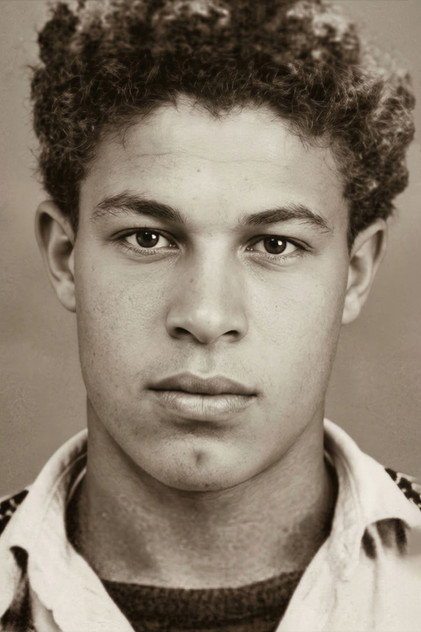
Ali Ammar, better known as Ali la Pointe, was born on May 14, 1930, in Miliana, Algeria, then under French colonial rule. An emblematic figure of the Algerian War of Independence, he remains one of the most striking symbols of the urban struggle waged by the National Liberation Front during the Batt...
Known for
Acting
Born
May 14, 1930
Place of birth
Miliana, Algeria
Died
October 8, 1957

0 / 1
0%
Your avg
Active
Top rated
Known for
Acting
Born
May 14, 1930
Place of birth
Miliana, Algeria
Died
October 8, 1957
SHOWS STARRING
Ali Ammar, better known as Ali la Pointe, was born on May 14, 1930, in Miliana, Algeria, then under French colonial rule. An emblematic figure of the Algerian War of Independence, he remains one of the most striking symbols of the urban struggle waged by the National Liberation Front during the Battle of Algiers. Born into a modest family, Ali Ammar grew up in a society deeply marked by colonial inequalities. From a very young age, he experienced poverty and quickly left school. His adolescence was marked by a difficult life in the working-class neighborhoods of Algiers, particularly in the Casbah, where he frequented marginalized circles and lived by petty crime. This existence led to several prison terms. It was during his incarceration that he became aware of the political situation in Algeria and embraced nationalist ideas. Prison became a place of ideological and personal transformation for him. Upon his release, he joined the National Liberation Front (FLN), an organization created in 1954 to wage armed struggle against the French presence. Thanks to his knowledge of the Casbah's streets and his determined temperament, he quickly became an active member of the FLN's clandestine networks in Algiers. Under the leadership of Yacef Saâdi, he participated in organizing resistance operations in the capital. During the Battle of Algiers, between 1956 and 1957, Ali la Pointe played a central role in the urban guerrilla actions against the French forces. He was intensely sought by French paratroopers, notably those led by Jacques Massu. Ali la Pointe gradually became a figure of popular resistance. His total commitment to the independence struggle and his refusal to surrender contributed to forging his legend. On October 8, 1957, French forces located his hideout in the Casbah of Algiers. Refusing to surrender, he remained holed up in the house with several companions, including Hassiba Ben Bouali, Mahmoud Bouhamidi, and a young child nicknamed Little Omar. The French army blew up the building, killing them. This dramatic disappearance left a deep impression and became a pivotal moment in the collective memory of the Algerian War. After Algeria's independence in 1962, Ali la Pointe was elevated to the status of a national martyr. His life, a blend of social marginalization, political awakening, and revolutionary commitment, embodies for many the radicalization of a segment of Algerian youth under colonial rule. His story gained international recognition thanks to Gillo Pontecorvo's 1966 film, The Battle of Algiers, in which he plays a central role. This film helped to spread his story far beyond Algeria and remains a landmark of political and historical cinema.